Historic Victorian & Edwardian Clothing at Boot Hill Museum in Dodge City
A closer look at original dresses, men’s clothing, wedding attire, mourning wear, children’s clothing and accessories preserved in this remarkable Kansas museum collection.
One of my favorite things to find while traveling is a museum with original historic clothing on display. Photographs and fashion plates are wonderful resources, but there is something completely different about seeing an actual garment that was worn more than a century ago.
During our visit to Boot Hill Museum in Dodge City, Kansas, I found an incredible collection of late 19th- and early 20th-century clothing, accessories, photographs and personal items.
Boot Hill Museum’s collection contains more than 60,000 objects, photographs and documents, with much of the collection dating from Dodge City’s early years in the 1870s through the 1920s. Many of the artifacts belonged to original Dodge City residents.
The museum lighting — combined with photographing through exhibit glass — made some of these pictures a little challenging. But there are so many wonderful clothing details here that I wanted to preserve and share them for other historical costumers, sewists and fashion-history enthusiasts.
An Early 20th-Century Wedding
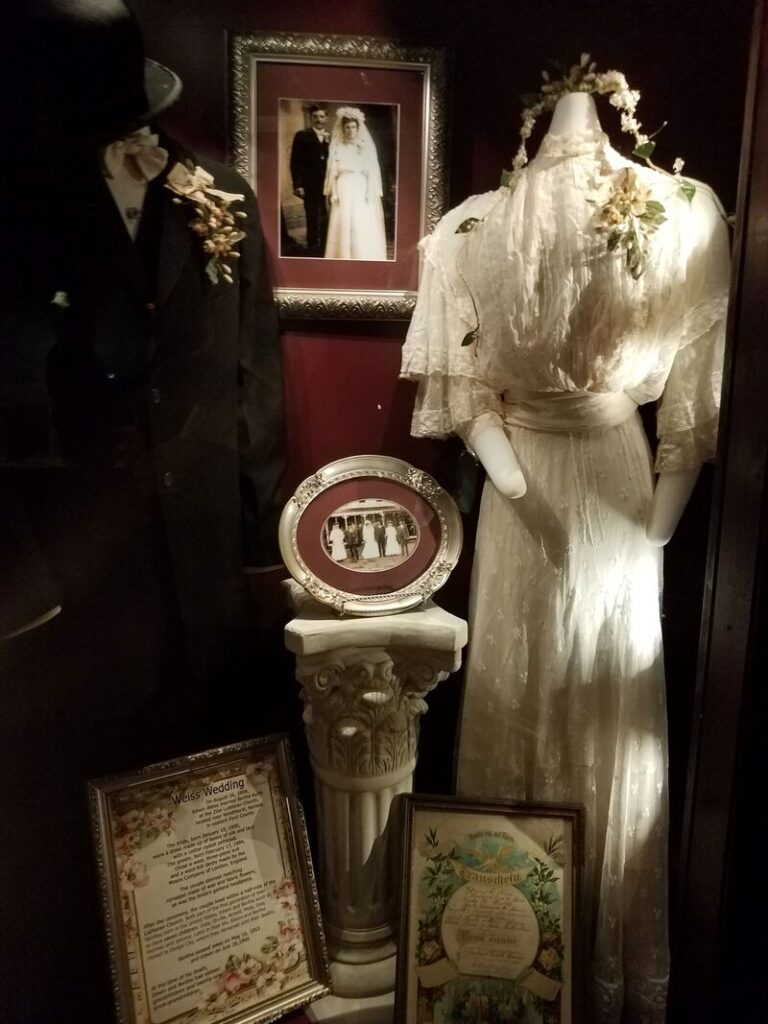
The first display is especially interesting because the museum preserved not simply a wedding dress, but a collection of items associated with the couple.
The display identifies this as the Weiss Wedding and dates the marriage to August 26, 1908. Another published account of the museum’s Victorian fashion collection also identifies the Weiss wedding clothing as dating to 1908.
The bride’s light-colored gown has a softly draped bodice, high neckline and elbow-length outer sleeves with delicate lace beneath. The waist is emphasized with a wide sash, while the skirt falls in a long, relatively narrow line compared with the much fuller skirts of earlier Victorian decades.
Beside it is the groom’s dark suit, while photographs of the couple provide the wonderful opportunity to see the clothing in its original historical context.
A Dramatic Women’s Tailored Ensemble
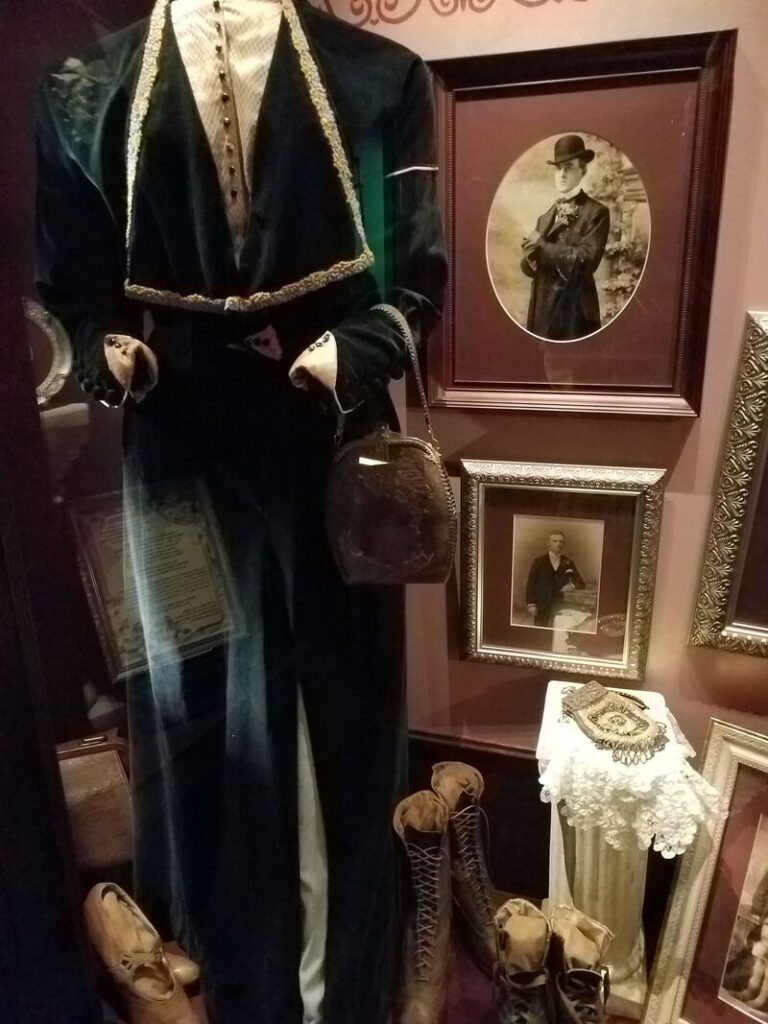
This dark women’s ensemble is a wonderful example of just how structured women’s clothing could be.
Notice the fitted silhouette, contrasting light-colored front, decorative trim running down the edges of the jacket, and the beautifully shaped cuffs. The long dark skirt creates an uninterrupted vertical line.
The display also includes a handbag, shoes and tall lace-up boots, along with period photographs.
For someone recreating historical clothing, museum displays like this are useful because we can study an entire look rather than just the dress itself.
Fur-Trimmed Victorian Outerwear
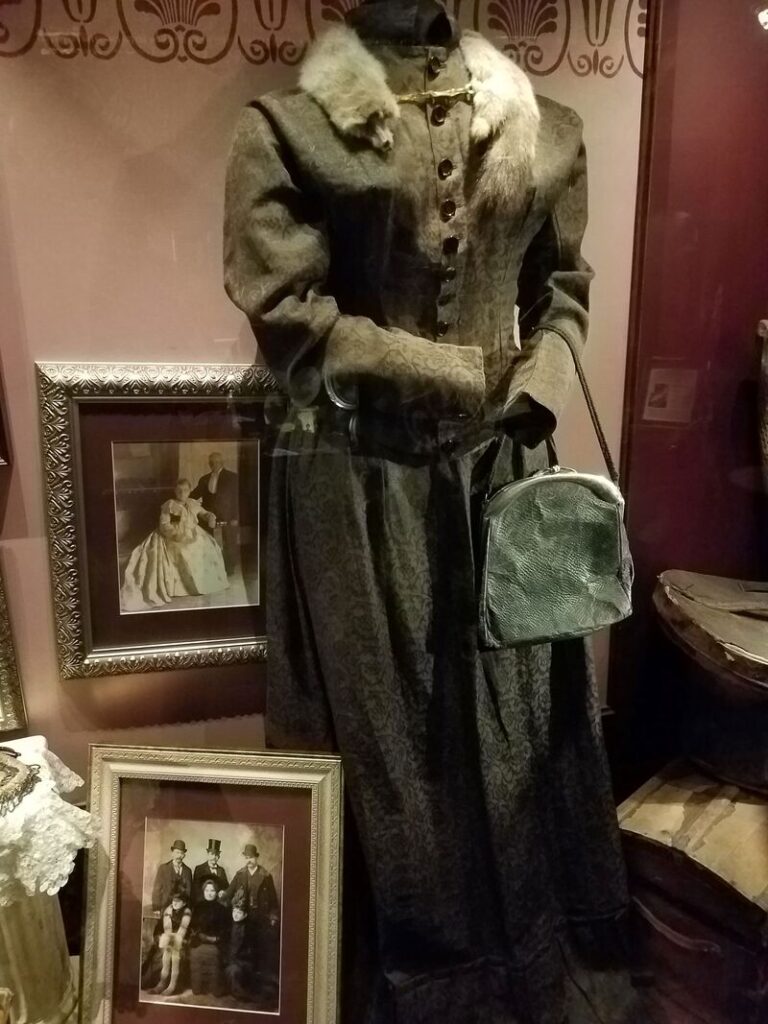
This dark patterned garment has an entirely different character.
The fitted bodice closes high at the neck with a row of dark buttons, while the shoulders and upper sleeves have considerable structure. Fur trim at the neckline adds both warmth and visual interest.
The fitted waist, long skirt and restrained decoration make the silhouette itself the star of the garment.
And look at that wonderful period handbag!
Men’s Formal Evening Wear
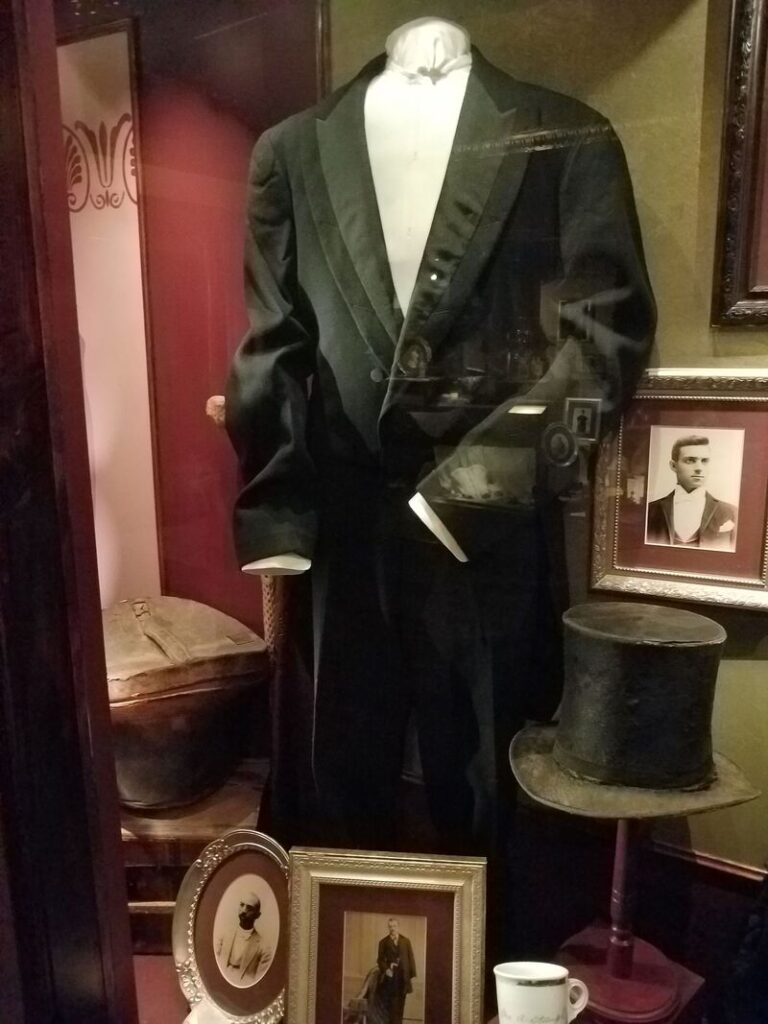
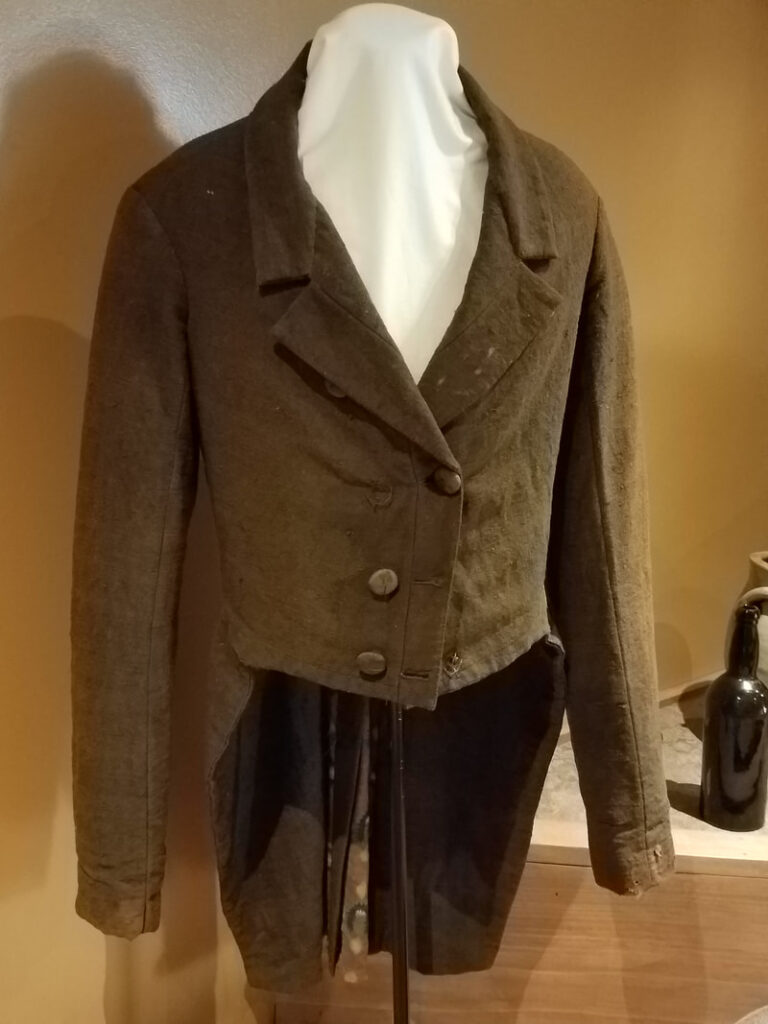
Women’s clothing tends to receive most of the attention in historical costuming, but men’s clothing is equally useful to study.
This formal black ensemble features long coat tails, broad satin-faced lapels and a crisp white formal shirtfront. The museum paired it with a top hat and several photographs showing similar formal clothing being worn.
Details like lapel shape, coat length, shirtfront and trouser proportions can be extremely useful when working with historical men’s patterns.
Fur, Satin and Winter Accessories
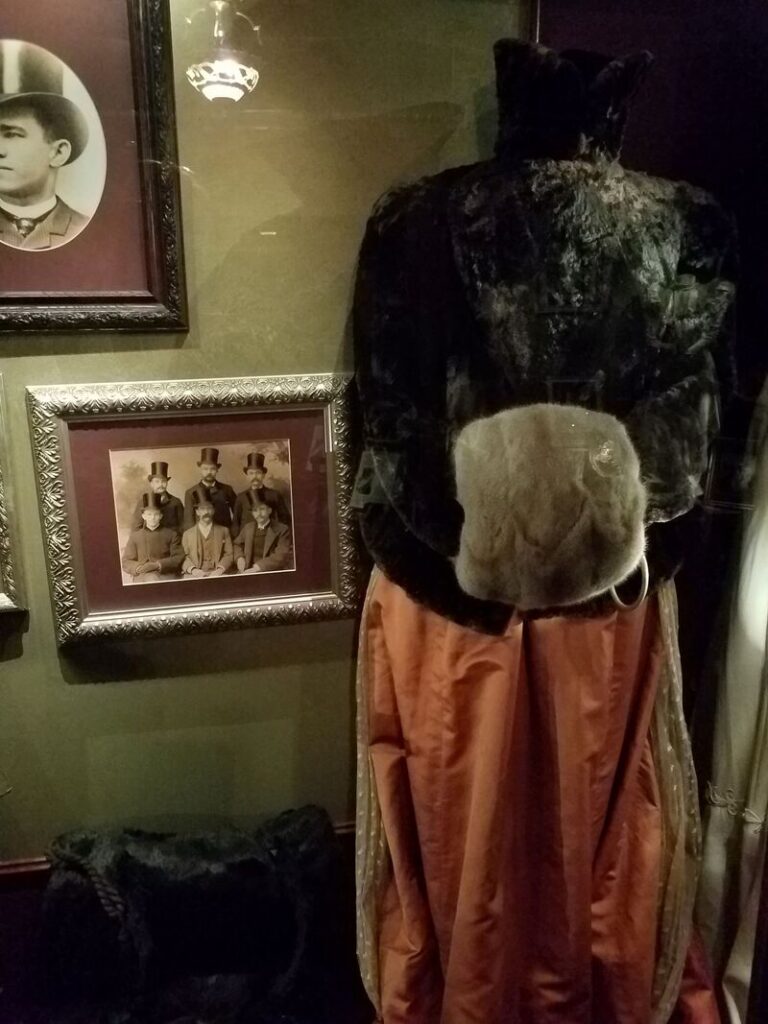
This display is a great reminder that historical dress involved much more than the gown underneath.
The dark fur outer garment is paired with a wonderfully large fur muff. Beneath it we can see a warm rust-colored skirt, creating a striking contrast in both color and texture.
Accessories such as muffs, hats, purses and gloves are easy to overlook when we’re concentrating on dress construction, but they were an important part of the finished appearance.
An Elaborately Decorated Light-Colored Dress
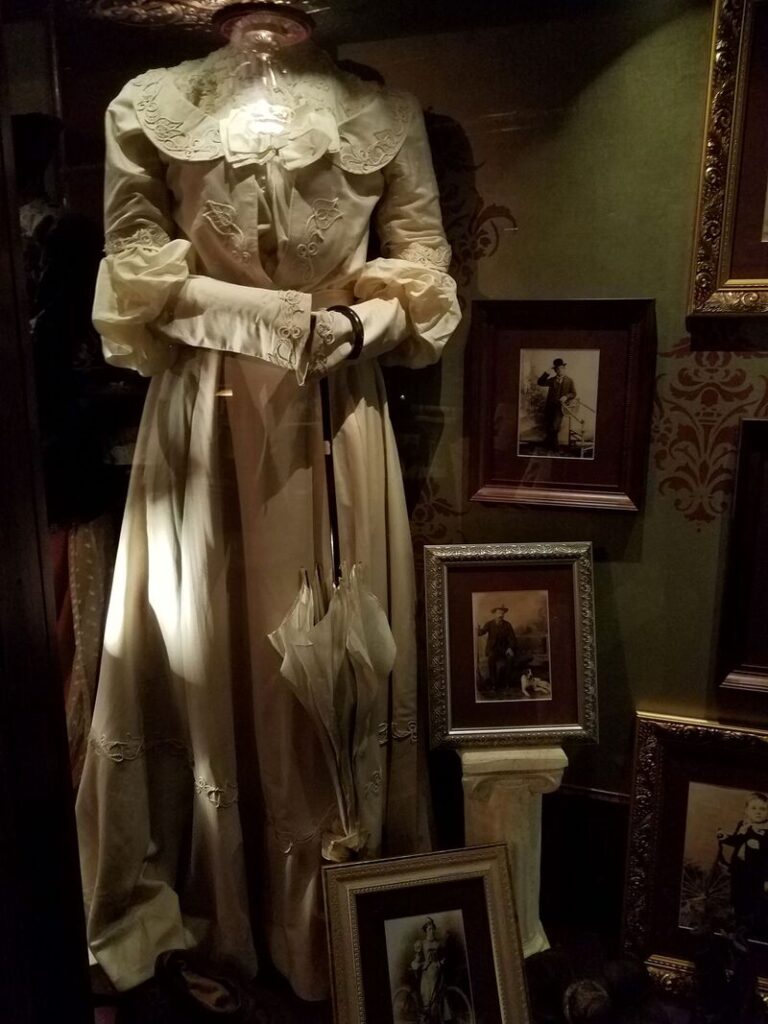
There is so much to study on this garment.
The large decorative collar immediately draws the eye, while the sleeves are full through the upper arm before narrowing toward the wrist. Decorative work appears on the collar, bodice, sleeves, cuffs and skirt.
Even the cuffs are unusually deep and elaborate.
The parasol displayed with the dress helps complete the picture of how such an ensemble might have appeared when worn.
This is exactly the sort of museum garment I could stand in front of for twenty minutes examining one detail after another!
Men’s Everyday Clothing
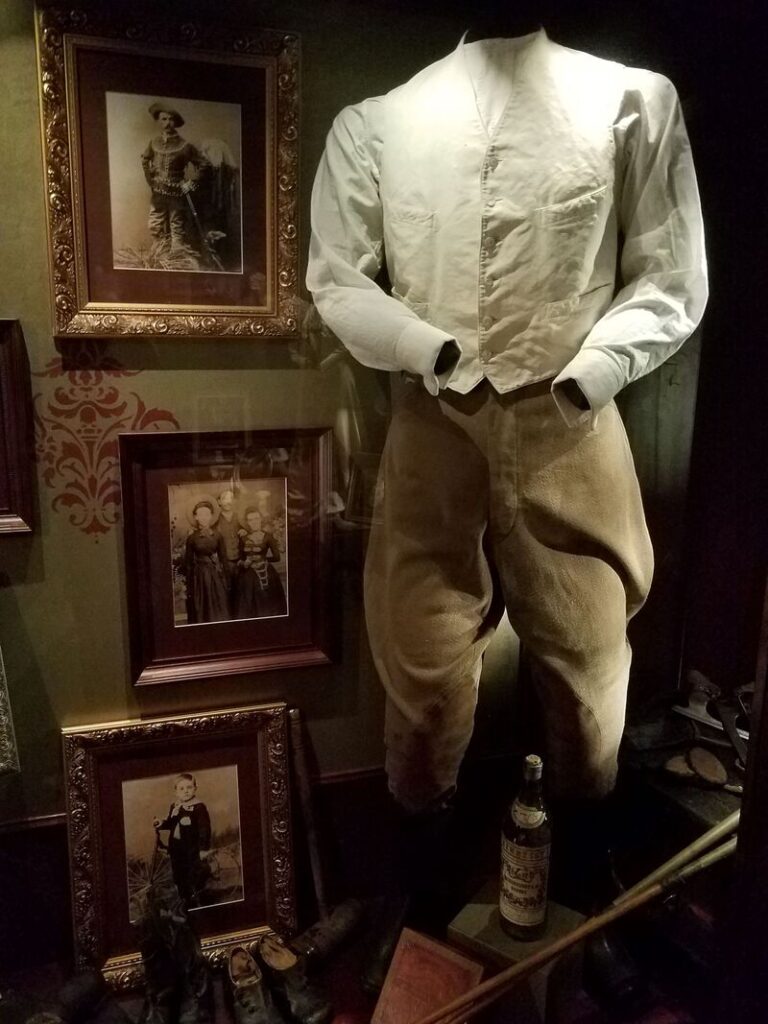
This men’s ensemble gives us a look at clothing considerably less formal than the evening suit shown earlier.
The light-colored shirt or waistcoat-style upper garment has a simple button front and several pockets, while the trousers are much heavier and looser through the leg.
For historical costumers, everyday clothing like this can be particularly useful because surviving photographs and museum exhibitions so often emphasize people’s best clothing.
Children’s Clothing
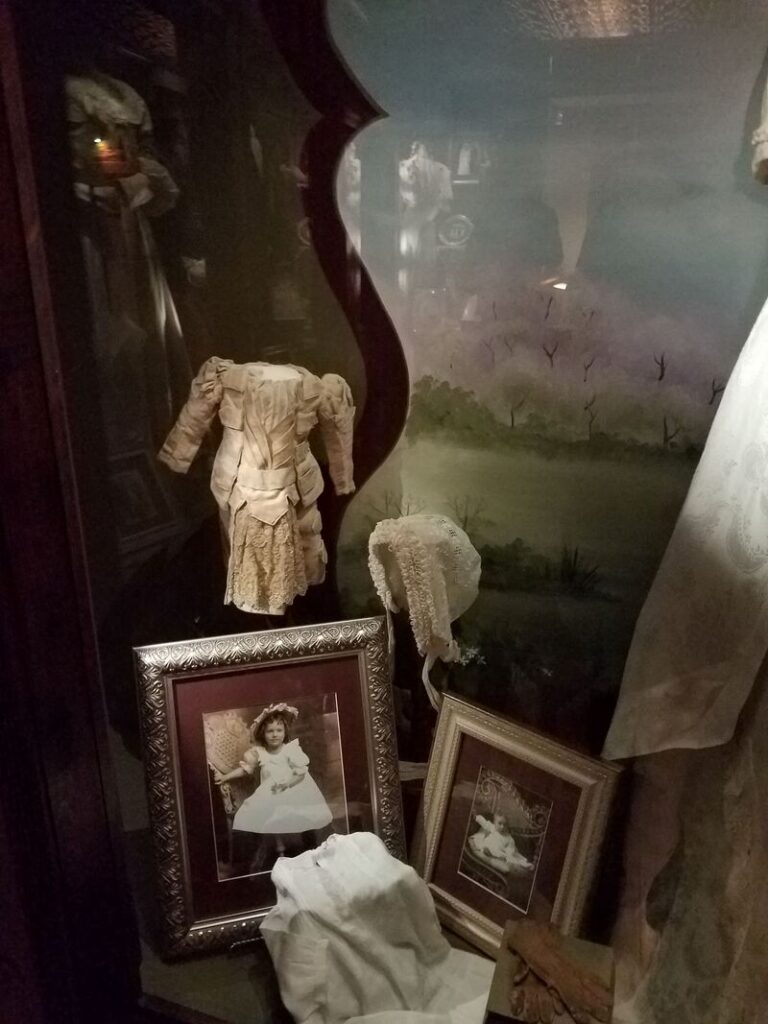
Children’s clothing is another area that can be surprisingly difficult to study.
Here the museum has displayed a small fitted child’s garment along with a lace bonnet and other pieces of children’s clothing. Period photographs beside the garments give us an idea of how children were actually dressed.
The tiny scale also makes the construction details especially fascinating.
An Elegant Dress With Asymmetrical Draping
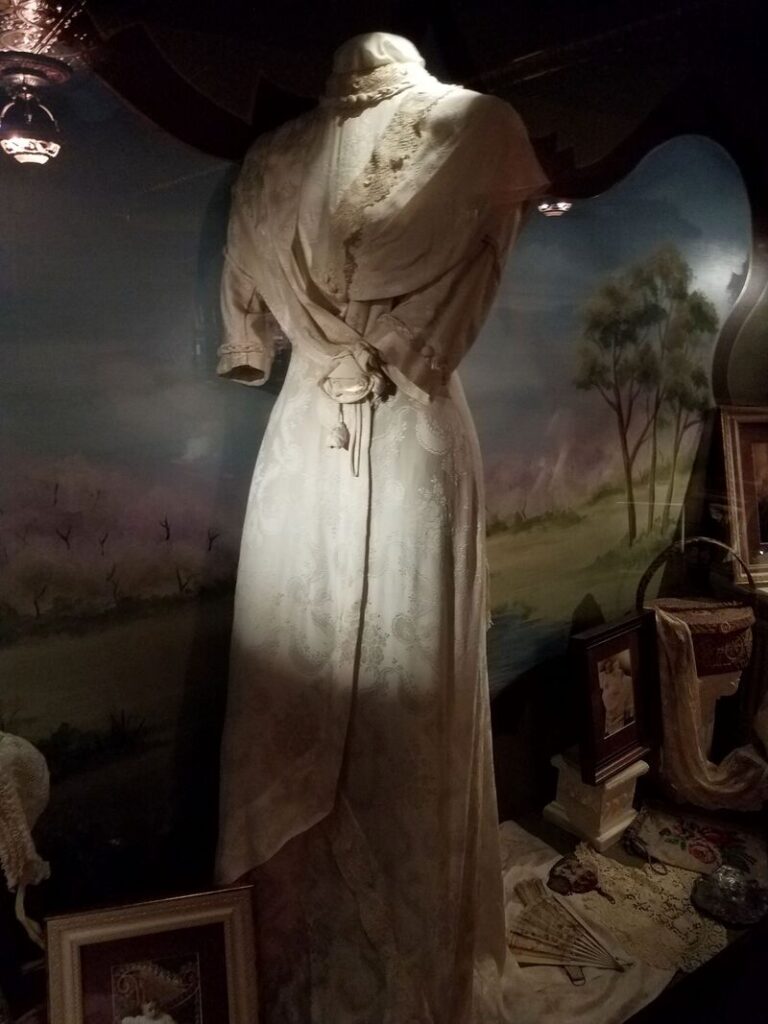
This light-colored dress is especially interesting because of the unusual treatment of the front of the bodice and skirt.
Rather than relying on a perfectly symmetrical design, the bodice has a softly draped overlay that crosses the upper body and is drawn toward the waist. A decorative rosette or gathered fabric ornament marks the point where the draping comes together.
Below it, the skirt continues the asymmetrical effect. One layer sweeps diagonally across the front, revealing more of the beautifully patterned fabric underneath.
The high neckline, relatively soft bodice and long, flowing skirt give the dress an elegant appearance, while the draping provides much of its visual interest without requiring an abundance of applied decoration.
This is a particularly useful garment for historical sewists to study because it shows just how much shape and detail could be created simply through fabric placement, layering and controlled draping.
A Closer Look at the Draped Waist and Skirt
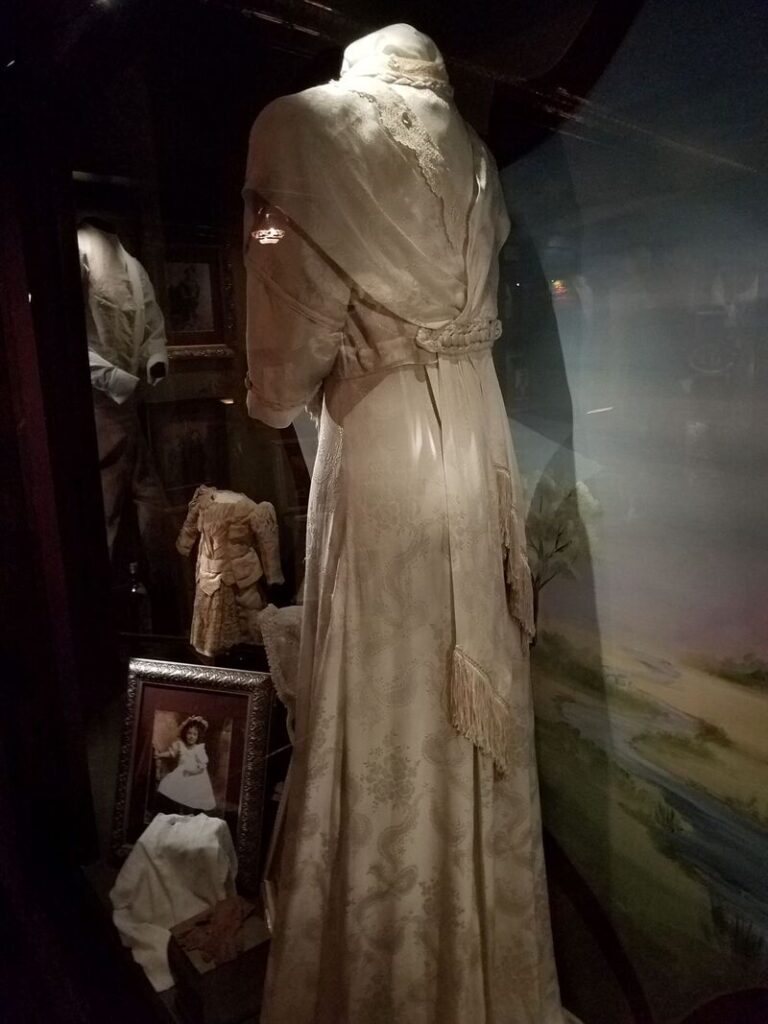
This second angle gives us an even better view of the waist treatment.
Notice how the fabric wraps and gathers into the decorative element at the back and how the upper layer falls asymmetrically over the skirt.
This is a perfect example of why I photograph historic garments from every angle the museum display allows.
You never know which photograph will reveal the construction detail you need later.
A Striking Dress With Dramatic Sleeves
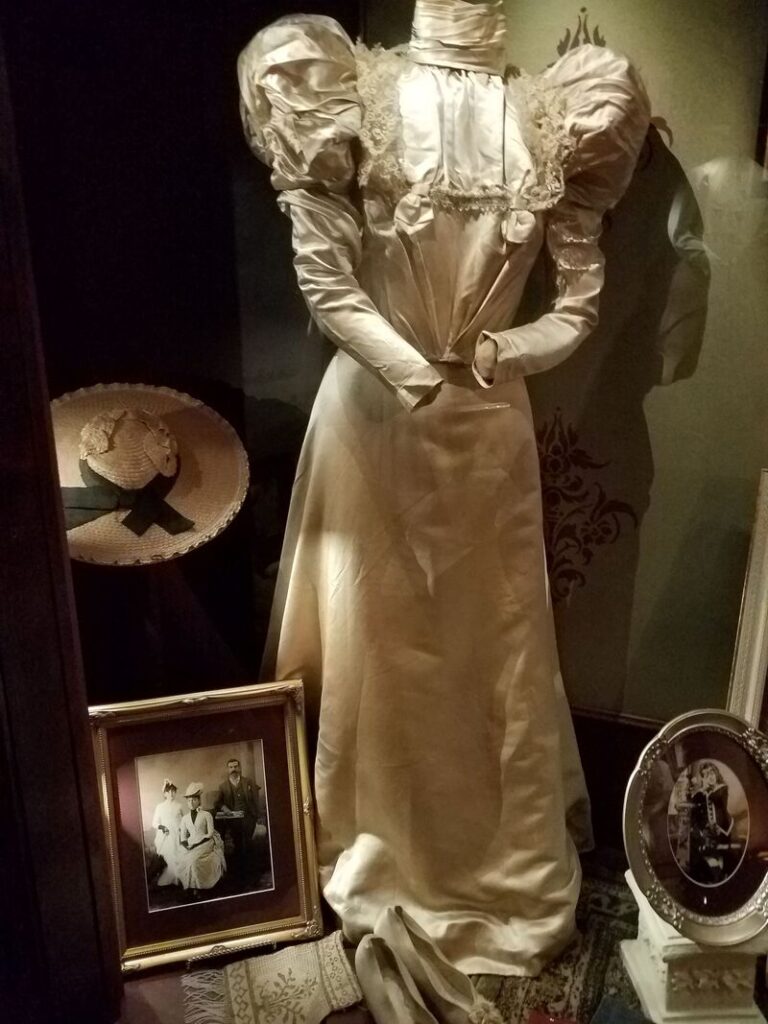
And then we come to those sleeves!
The dramatically puffed upper sleeves dominate this light-colored dress, while the lower sleeves fit much more closely to the arm.
The bodice combines a high neckline, lace or decorative panels and bows, while the comparatively simple long skirt allows all of that visual interest above the waist to take center stage.
Sleeve shape is one of the quickest ways to change the entire character of a historical dress, and this is a fantastic garment to study for anyone working on late-19th-century styles.
A Beautiful Bustled Victorian Dress
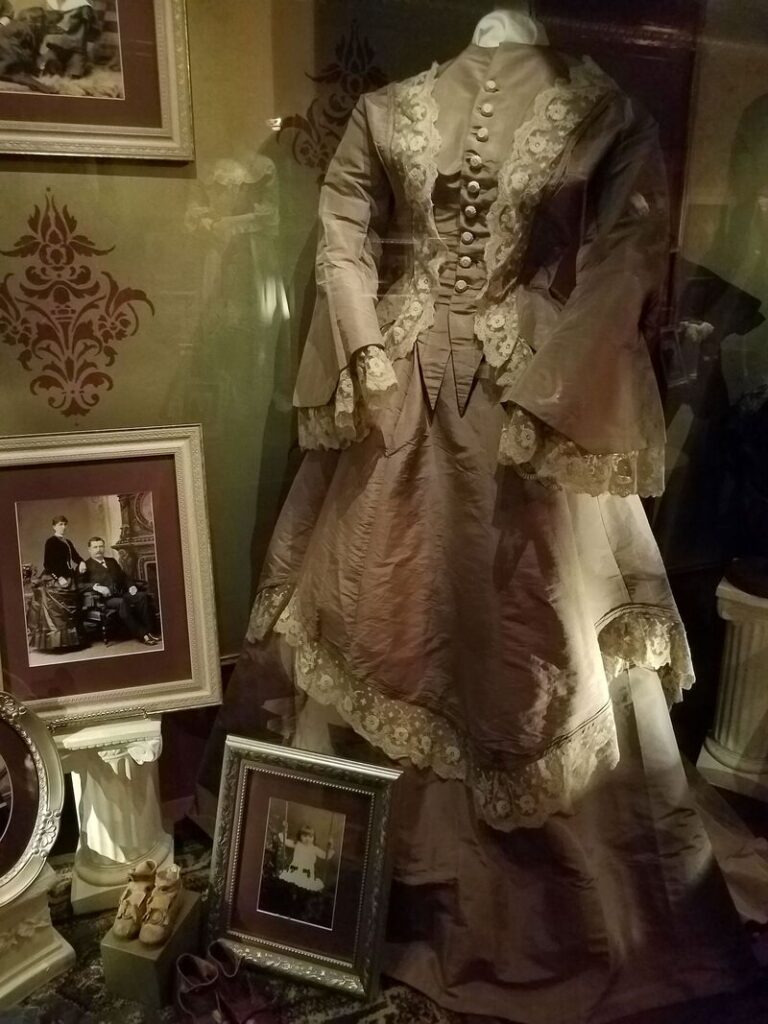
This dress is loaded with details.
The fitted bodice has a high neckline, numerous buttons, pointed lower front and extensive lace trim. The sleeves are closely fitted through the upper arm before opening into wider cuffs edged with lace.
Then there is the skirt, with contrasting panels, draping and more lace.
This is the sort of garment where the longer you look, the more you notice.
For a sewist, there are ideas everywhere — button placement, cuff construction, lace application, bodice shaping, skirt draping and contrasting fabrics.
A Victorian Mourning Dress
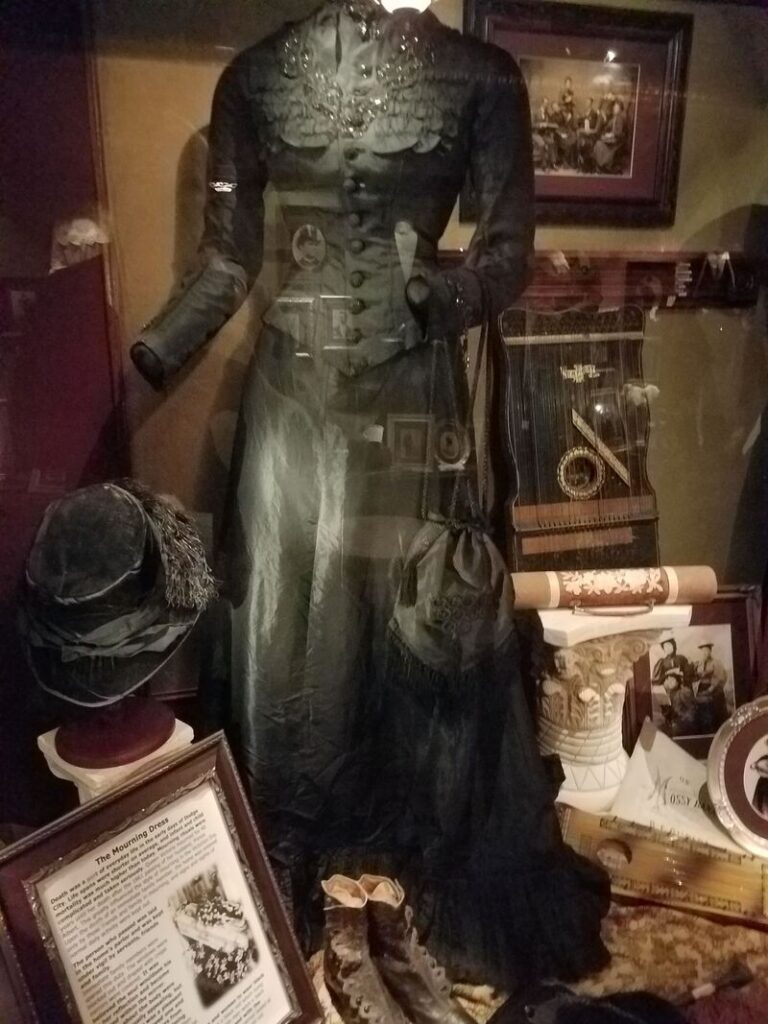
This dark dress is identified by the museum display as The Mourning Dress.
Even through the reflections in the glass, you can see the amount of detail incorporated into the garment. The bodice is closely fitted through the waist, with a row of buttons and a heavily decorated neckline. The long skirt continues the dark monochromatic appearance.
The display also includes a dark hat, shoes, purse and other objects, giving us a much fuller picture than the dress alone would provide.
A Magnificent Late Victorian Dress
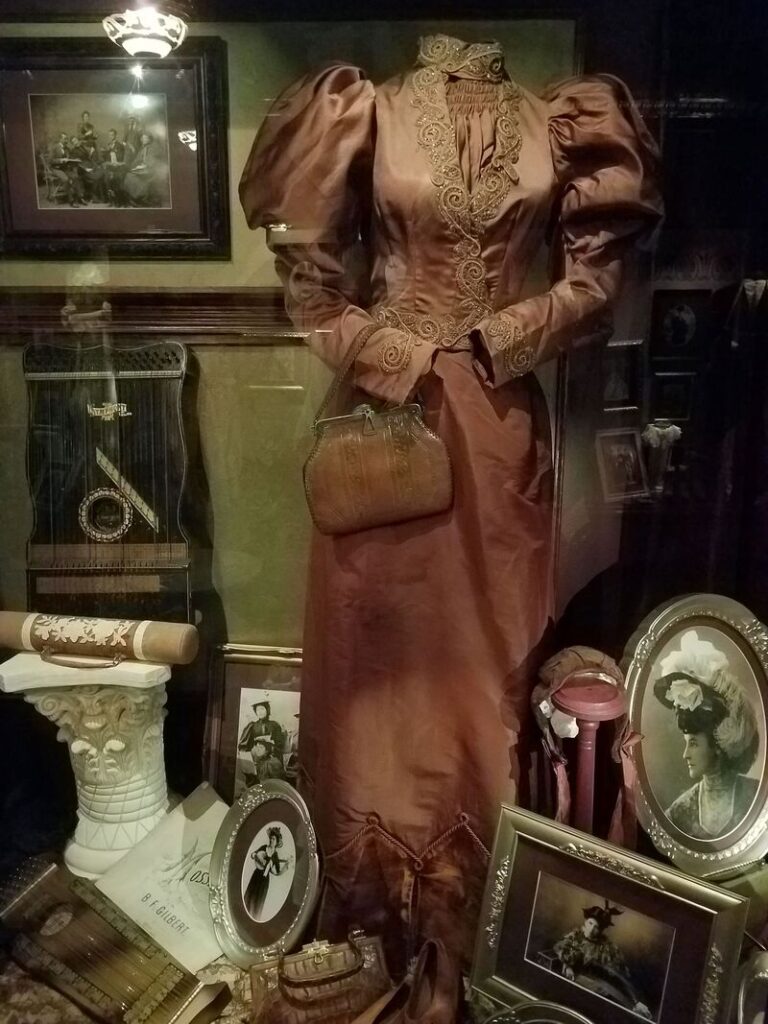
This may be my favorite garment in the entire collection.
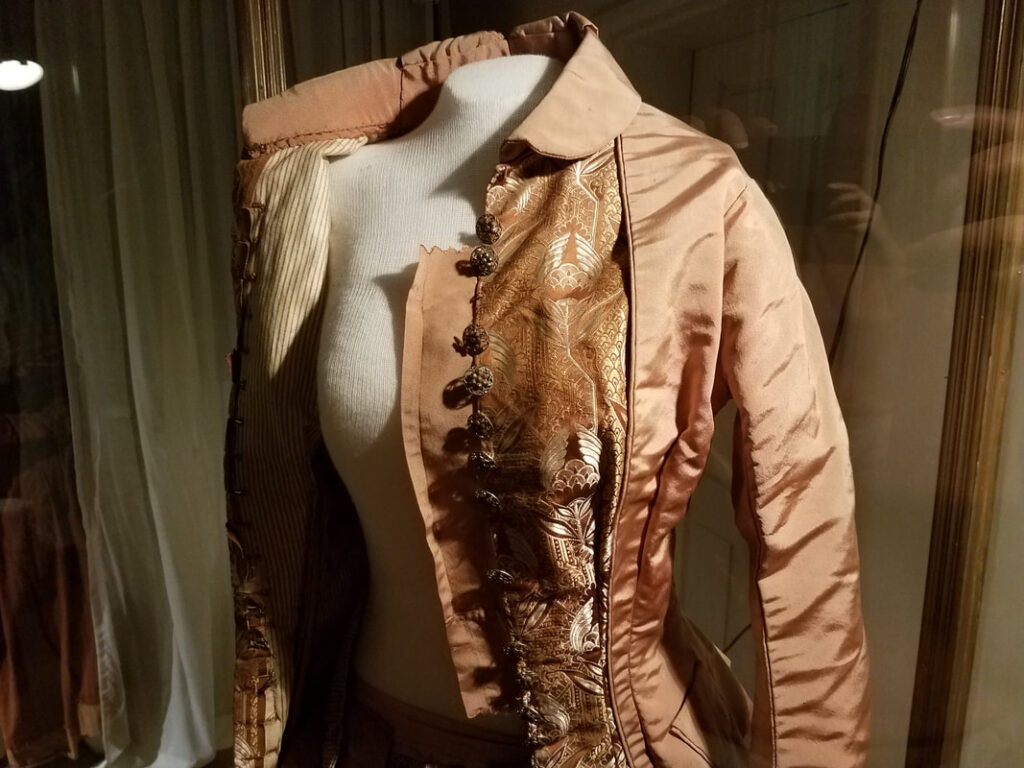
The warm reddish-brown fabric is embellished with extraordinary decorative work around the high neckline, down the center front, around the waist and onto the cuffs.
And once again — look at those sleeves!
The upper sleeves are enormously full before tapering into fitted lower sleeves. Combined with the narrow waist and long skirt, they create an unmistakably dramatic silhouette.
The museum has also displayed a matching or coordinating handbag with the dress.
For anyone interested in recreating late Victorian clothing, this photograph alone provides a wealth of inspiration.
Corsets, Undergarments and a Victorian Dressing Table
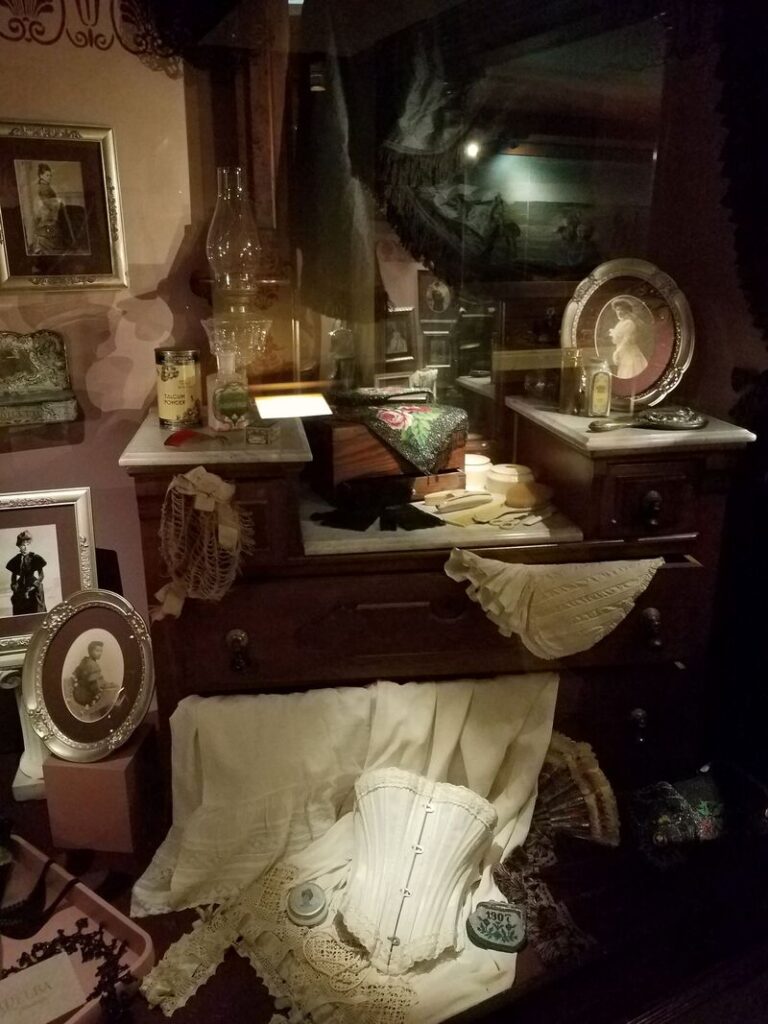
Finally, this display takes us underneath the fashionable silhouette.
Among the many personal items is a white corset displayed prominently in the foreground, along with lace, textiles, fans and what appear to be various grooming and dressing-table articles.
These objects matter because the fashionable silhouette wasn’t created by the dress alone.
Corsetry and other undergarments helped establish the foundation over which the clothing was fitted. Accessories, hair arrangements, hats, gloves, fans, purses and other personal items then completed the appearance.
For a historical costumer, studying the layers underneath the dress can be every bit as useful as studying the finished gown.
Why Museum Clothing Collections Are So Valuable to Historical Sewists
Original garments give us information that fashion illustrations and sewing patterns can’t always provide.
We can study the proportions of a sleeve in relation to a bodice. We can see where decoration was concentrated and where it wasn’t. We can examine how skirts actually hung, how accessories were coordinated with an outfit, and — when we’re lucky enough to get a side or back view — how fabric was arranged around the body.
And perhaps most importantly, surviving garments remind us that these fashions were real clothes worn by real people.
That’s especially true of the collection at Boot Hill Museum. According to the museum, much of its collection belonged to original Dodge City residents, and a significant portion came from the former Beeson Museum, whose collection had roots reaching back into the late 19th century.
So these aren’t simply examples of what Victorian and Edwardian fashions looked like.
They are pieces of the lives of people who lived in and around historic Dodge City.
Frequently Asked Questions
Where is this Victorian and Edwardian clothing collection located?
These garments were photographed at Boot Hill Museum in Dodge City, Kansas. The museum preserves clothing, photographs, personal belongings, and other artifacts connected with the history of Dodge City and the surrounding region.
Are the clothes at Boot Hill Museum original historic garments?
The museum’s collections include original historic artifacts, and many objects in its collection belonged to early Dodge City residents. Individual garments may have different histories and provenance, so it’s best not to assume the original owner or exact date of a particular piece unless the museum display identifies it.
What time periods are represented by these historic clothes?
The clothing shown in this collection represents fashions associated primarily with the late Victorian and early Edwardian periods. Because individual pieces are not all clearly dated in the displays, we’ve avoided assigning exact years based on appearance alone.
Why are original museum garments useful for historical sewing?
Original garments allow sewists and historical costumers to study details that aren’t always apparent in fashion illustrations. Sleeve proportions, bodice shaping, skirt draping, trim placement, closures, accessories, and the relationship between different parts of an outfit can all provide inspiration for recreating period clothing.
Can these photographs be used as references for recreating Victorian and Edwardian clothing?
Absolutely. Museum photographs can be excellent visual references when studying historical silhouettes, construction ideas, trim placement, accessories, and fabric draping. For a historically accurate reproduction, however, it’s best to combine photographs with dated patterns, surviving garments with documented provenance, period fashion publications, and other primary sources.
If you’re ever traveling through Kansas and enjoy historic clothing, Boot Hill Museum is certainly worth putting on your list.
Boot Hill Museum official website
Love Historical Sewing & Fashion?
Join the Old Time Patterns email list for historical sewing resources, vintage fashion research, new articles, free resources, and updates from the Old Time Patterns library.
Happy sewing!
These are awesome pictures! It’s amazing how beautiful the garments are, especially given their age. Life was so different back then, and I marvel at the amount of fabric used in each outfit. The clothing accentuated the lines of the wearer and the movement of the fabric gave grace to the wearer. To a sewer these pictures are a feast!
This was lovely thanks for sharing