A Close-Up Look at a 19th-Century Tailcoat
One of my favorite parts of visiting historic sites and museums is getting the opportunity to study surviving garments up close. Photographs and fashion plates can tell us a great deal about historical clothing, but there is nothing quite like seeing an actual garment and examining the little construction details that aren’t always obvious in an illustration.
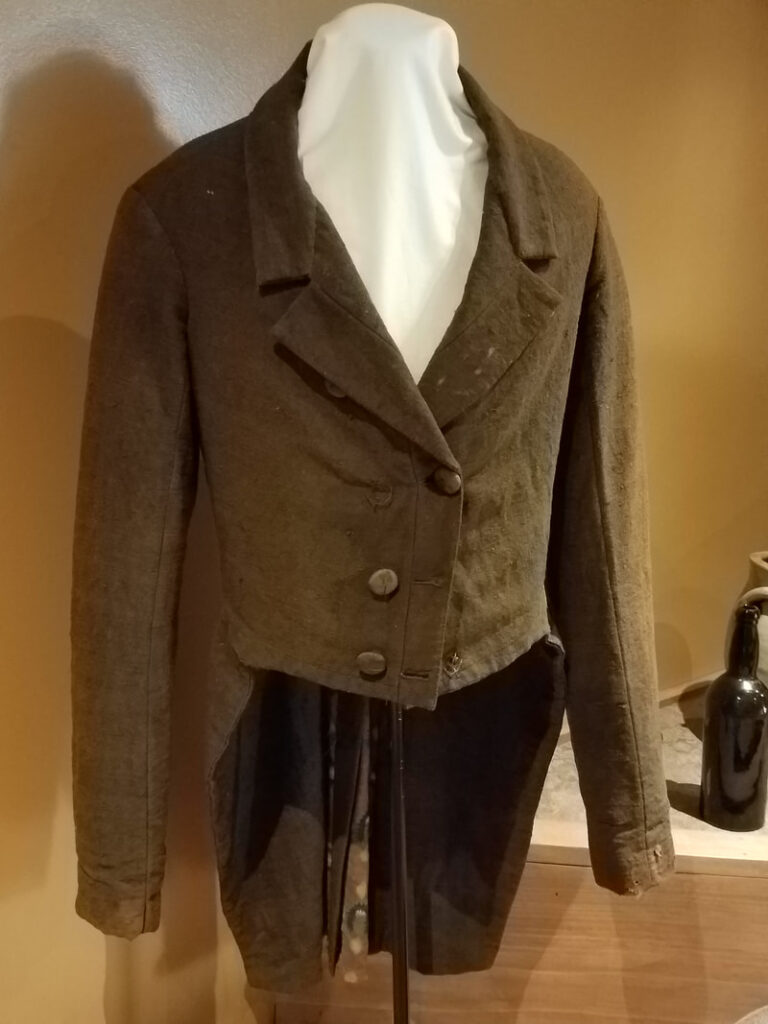
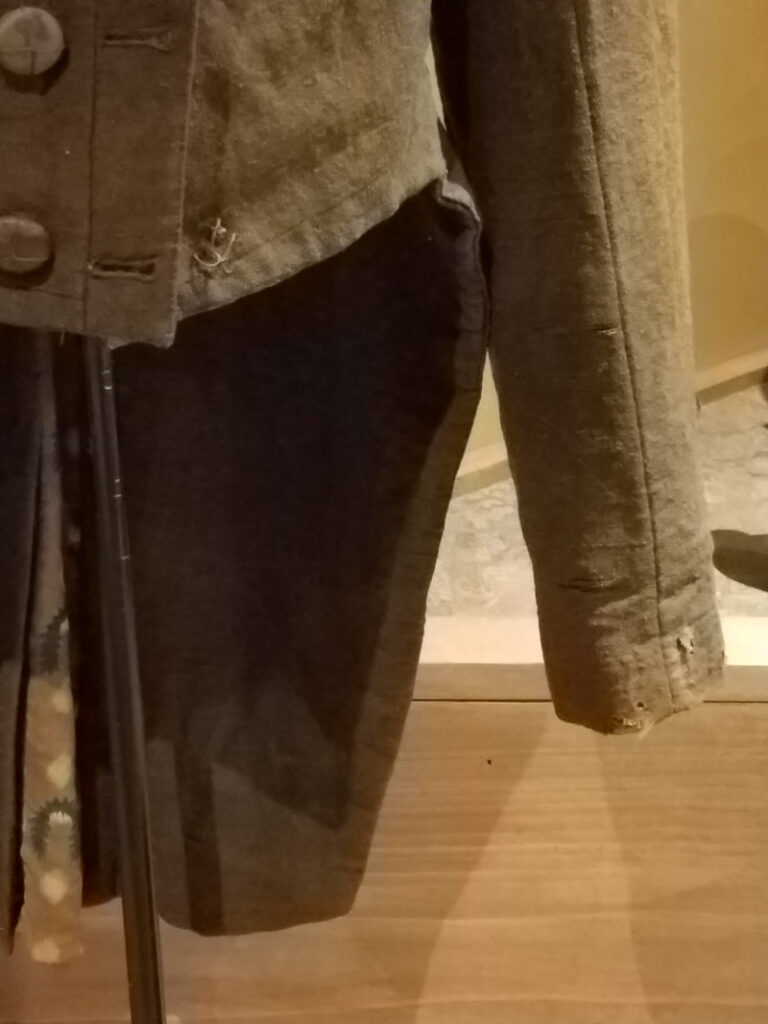
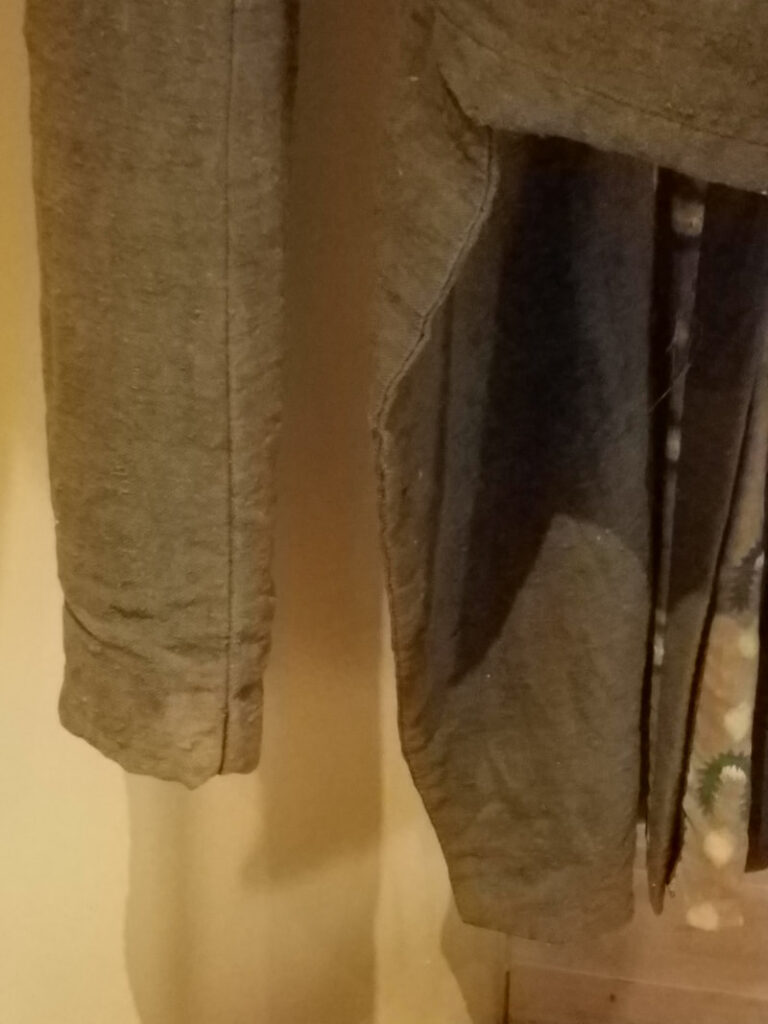
I photographed this 19th-century tailcoat while visiting Bennett Place in Durham, North Carolina, and I was thrilled to find it in the museum.
Bennett Place is best known as the site where Confederate General Joseph E. Johnston and Union Major General William T. Sherman negotiated the surrender of Confederate forces in the Carolinas, Georgia, and Florida during the final weeks of the Civil War. Their final military surrender agreement was reached on April 26, 1865, in what became the largest troop surrender of the American Civil War.
But for someone fascinated by historical clothing and sewing, there was another treasure waiting inside the museum: this tailcoat.
Studying the Construction of the Tailcoat
I had never had the opportunity to examine a mid-19th-century tailcoat this closely before, so naturally I stood in front of it studying every detail I could see!
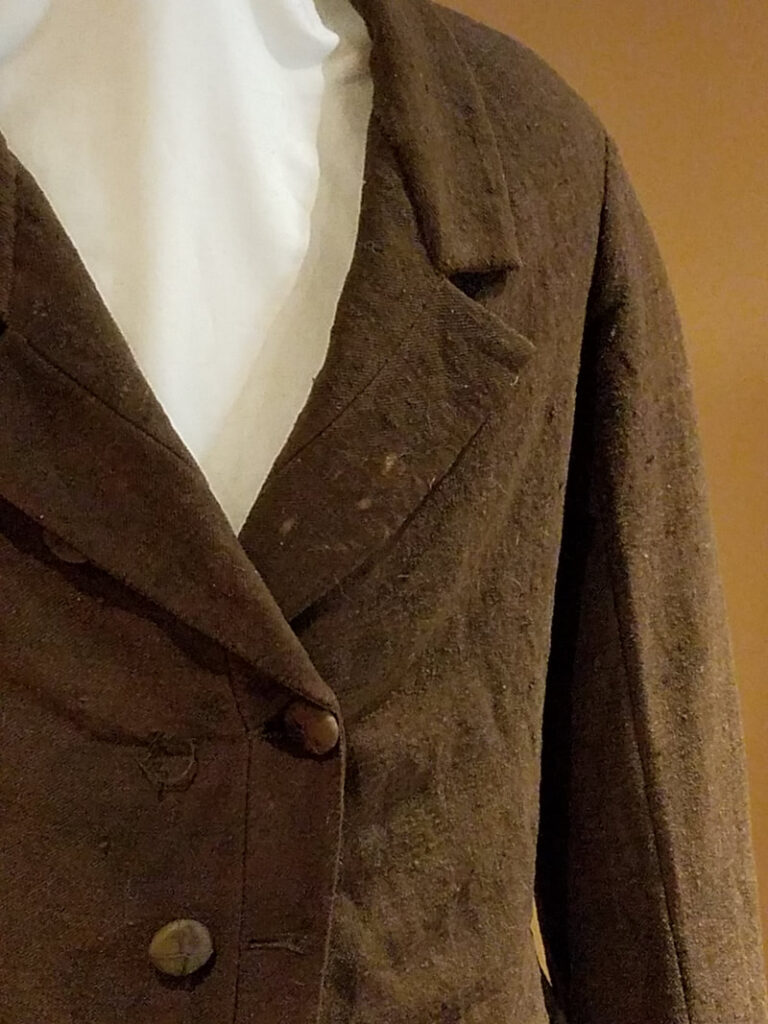
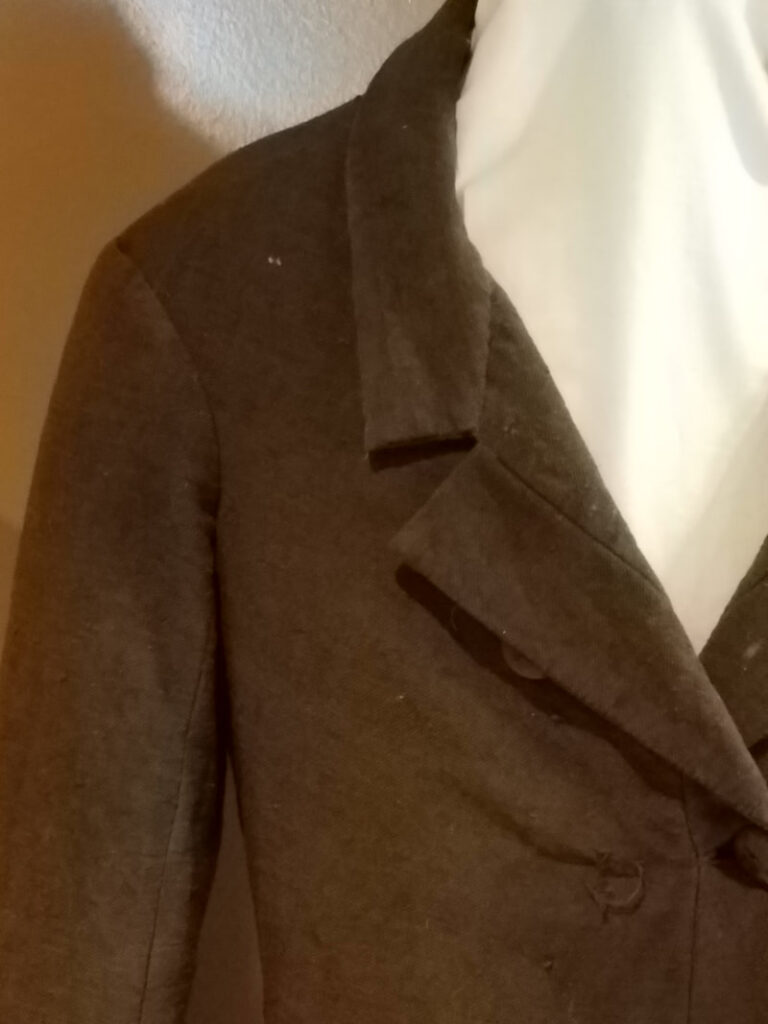
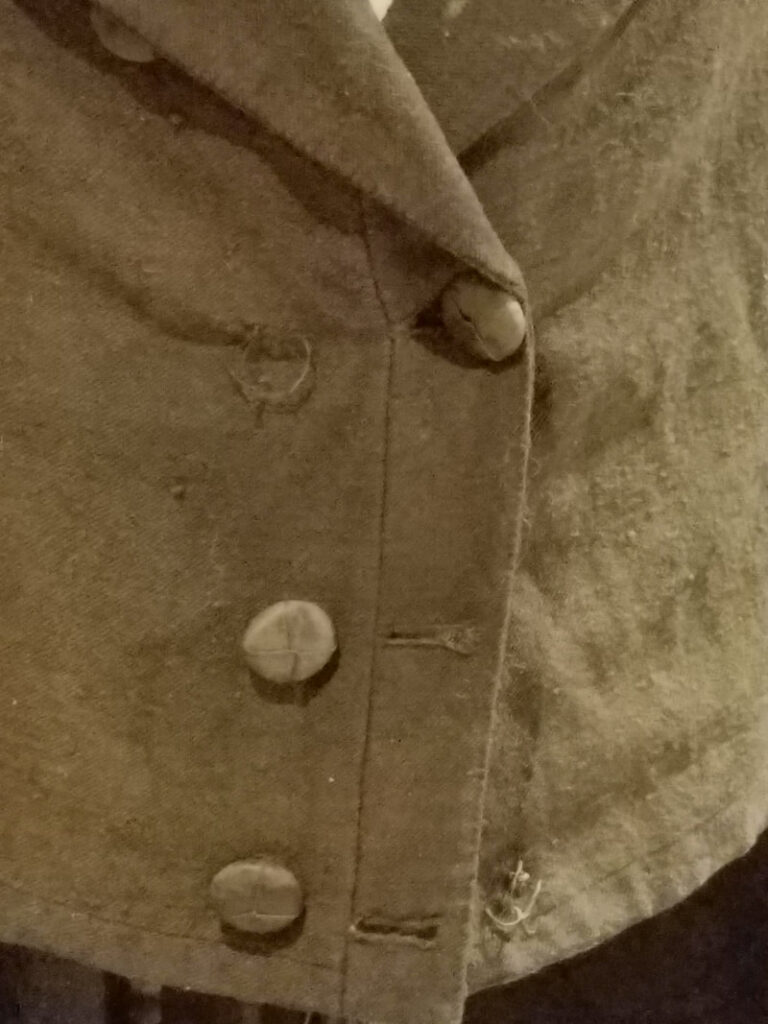
The photographs below give us a wonderful opportunity to examine some of the garment’s surviving construction and design details.
Take a close look at the:
- wide, shaped lapels and collar
- fitted front of the coat
- button placement and buttonholes
- covered buttons
- curved lower front edge
- long tails extending from the back
- narrow sleeves and cuff construction
- visible seams and shaping
- areas of wear and damage that reveal something of the garment’s age and construction
For historical sewers, details like these can be extremely useful. A surviving garment allows us to see how the pieces actually fit together in three dimensions—something that can be difficult to understand from a fashion plate or period illustration alone.
I only wish I could have gotten around to the back of the coat! The display prevented me from seeing that side clearly, and the back construction and shaping would have been fascinating to study.
Still, I took as many close-up photographs as I could. I hope they provide useful reference material for anyone researching 19th-century men’s clothing, historical tailoring, Civil War-era clothing, or period coat construction.
Photographs of the Tailcoat
Below are my photographs from the Bennett Place museum. Click or enlarge the images where possible to study the construction details more closely.
What Can We Learn From Surviving Historical Garments?
Surviving garments are invaluable resources for historical clothing research because they preserve details that may never have been recorded in written instructions.
Even when we cannot handle or examine a garment outside its display case, close-up photographs can help us study seam placement, shaping, proportions, closures, collars, lapels, sleeves, buttonholes, and other construction details.
They can also remind us that historical clothing was real clothing. Garments were worn, altered, repaired, damaged, and eventually preserved. The wear visible on an original piece is part of its story.
For anyone attempting to reproduce historical clothing, I recommend studying as many different types of primary sources as possible: surviving garments, period photographs, fashion plates, tailoring manuals, sewing instructions, advertisements, and original patterns. Each can tell us something the others cannot.
Love Historical Sewing & Fashion?
Join the Old Time Patterns email list for historical sewing resources, vintage fashion research, new articles, free resources, and updates from the Old Time Patterns library.
Frequently Asked Questions About 19th-Century Tailcoats
What is a tailcoat?
A tailcoat is a coat with the front of the garment cut shorter while the back extends into long tails. Different forms of tailcoats were worn during the 19th century, and their cut, proportions, lapels, closures, and other details changed as men’s fashions evolved.
Were tailcoats worn during the Civil War era?
Yes. Tailcoats and other forms of fitted coats were part of 19th-century men’s wardrobes, although the appropriate style depended on the date, occasion, social setting, and wearer.
For historical clothing research, it is important not to assume that every garment described as a “tailcoat” was constructed or worn in exactly the same way throughout the century.
What details should historical sewers study on an original tailcoat?
Look beyond the overall silhouette. Examine the shape and placement of the collar and lapels, shoulder and side seams, sleeve shape, cuffs, buttons and buttonholes, front closure, waist shaping, pockets, lower front edge, and the construction and placement of the tails.
If the inside of an original garment is visible, the lining, seam allowances, interfacing, padding, stitching, and other internal construction can be even more revealing.
Why are surviving garments useful for historical sewing research?
Surviving garments allow us to examine how historical clothing was actually constructed rather than relying entirely on illustrations or modern interpretations.
A fashion plate may show us the fashionable appearance of a coat, while an original garment can reveal how a tailor created that shape.
Can you reproduce a historical garment from museum photographs?
Photographs can provide valuable clues, but they usually aren’t enough to create an exact reproduction by themselves. Important information such as measurements, internal construction, fabric composition, hidden seams, alterations, and the back or interior of the garment may not be visible.
Museum photographs are best used alongside period tailoring manuals, patterns, other surviving garments, and additional primary sources.
Where is Bennett Place?
Bennett Place is a North Carolina State Historic Site in Durham, North Carolina. The site preserves and interprets the location where Generals Joseph E. Johnston and William T. Sherman met in April 1865 to negotiate the surrender of Confederate forces in the Carolinas, Georgia, and Florida.
Today the historic site includes reconstructed farm buildings and a visitor center with museum exhibits relating to the Bennett family and the closing days of the Civil War.
More Historical Clothing Research
If you enjoy examining original garments and primary sources like this one, explore more of the historical clothing, sewing, fashion magazine, and pattern resources here at Old Time Patterns.
New resources are added as I continue researching and documenting historical clothing.
Happy sewing—and happy researching!
Hello, thanks for posting this