Peterson’s Magazine Online Archive: Free Issues & Historical Fashion Research
Peterson’s Magazine was one of the major American women’s magazines of the 19th century and remains a wonderful primary source for anyone interested in Victorian fashion, historical sewing, needlework, women’s history, and everyday life in the 1800s.
Published in Philadelphia during the 19th century, Peterson’s offered its readers much more than fashion news. Issues included fashion plates and illustrations, sewing and dress patterns, embroidery, crochet, knitting and other fancywork, household information, fiction, engravings, and material covering many of the interests of women of the period.
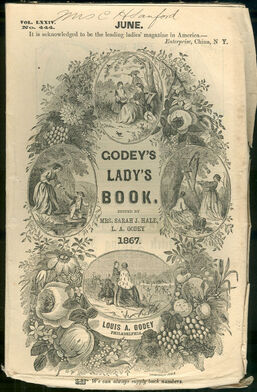
For historical costumers and researchers, Peterson’s is particularly valuable because it provides another contemporary view of 19th-century clothing alongside better-known publications such as Godey’s Lady’s Book. Looking at multiple period sources can help us better understand changing silhouettes, trims, sleeves, accessories, hairstyles, children’s clothing, needlework, and the many other details that made up fashionable dress.
Where Can You Read Peterson’s Magazine Online?
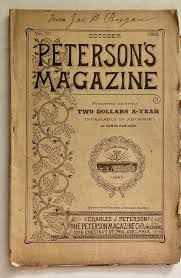
Original volumes of Peterson’s Magazine have been digitized by libraries and archives, making it possible to read many issues online for free. Unfortunately, the available scans are scattered among different collections, and not every year or issue is equally easy to find.
That’s why I created this index.
Below you’ll find my year-by-year collection of Peterson’s Magazine volumes that I have been able to locate online for free. My current index begins with 1848 and continues through 1891. It is not yet a complete archive, and some years have more than one available scan while others are still missing.
Where I’ve found multiple digitized copies, I’ve included them. Different scans can vary in quality and completeness, so if one copy doesn’t contain the material you’re looking for, it’s always worth checking another.
What Can You Find in Peterson’s Magazine?
If you’re researching historical clothing, don’t stop at the fashion plates. Peterson’s published a remarkable variety of material useful to historical sewers and researchers.
Depending on the year and issue, you may find fashion illustrations, garment patterns, descriptions of current fashions, embroidery and crochet patterns, knitting and other fancywork, household material, engravings, fiction, and much more.
These magazines give us something modern fashion-history books cannot: the opportunity to explore clothing and women’s interests through material that women were actually reading during the period.
Choose a year below and start exploring the surviving issues of Peterson’s Magazine online.
1848
Jan-Dec https://hdl.handle.net/2027/iau.31858034493183
1849
Jan-Dec https://hdl.handle.net/2027/iau.31858034542997
1850
Jan-Dec https://hdl.handle.net/2027/njp.32101076519832
Jul-Dec https://hdl.handle.net/2027/inu.32000000715575
1851
Jan-Jun https://hdl.handle.net/2027/iau.31858034493126
1853
Jan-Dec https://hdl.handle.net/2027/njp.32101076519840
Jan-Dec https://hdl.handle.net/2027/iau.31858034493175
1854
Jan-Dec https://hdl.handle.net/2027/njp.32101076519857
1855
Jan-Dec https://hdl.handle.net/2027/njp.32101076519865
1856
Jan-Dec https://hdl.handle.net/2027/njp.32101076519873
Jan-Dec https://hdl.handle.net/2027/inu.32000000715625
1857
Jan-Dec https://hdl.handle.net/2027/njp.32101076519881
1858
Jan-Dec https://hdl.handle.net/2027/njp.32101076519899
1859
Jan-Dec https://hdl.handle.net/2027/njp.32101076519907
1860
Jan-Dec https://hdl.handle.net/2027/njp.32101076519915
1861
Jan-Dec https://hdl.handle.net/2027/njp.32101076519923
Jan-Jun https://hdl.handle.net/2027/uc1.a0008469710
1862
Jan-Dec https://hdl.handle.net/2027/njp.32101076519931
1863
Jan-Dec https://hdl.handle.net/2027/njp.32101076519949
1864
Jan-Dec https://hdl.handle.net/2027/njp.32101076519956
1865
Jan-Dec https://hdl.handle.net/2027/njp.32101076519964
1866
Jan-Dec https://hdl.handle.net/2027/njp.32101076519972
Jul-Dec https://hdl.handle.net/2027/inu.32000000716060
1867
Jan-Dec https://hdl.handle.net/2027/njp.32101076519980
1868
Jan-Dec https://hdl.handle.net/2027/njp.32101076519998
1869
Jan-Dec https://hdl.handle.net/2027/njp.32101076520004
1870
Jan-Dec https://hdl.handle.net/2027/inu.30000093881211
1871
Jan-Dec https://hdl.handle.net/2027/njp.32101076520012
1872
Jan-Jun https://hdl.handle.net/2027/njp.32101076520020
Jul-Dec https://hdl.handle.net/2027/njp.32101076520038
1873
Jan-Dec https://hdl.handle.net/2027/njp.32101076520046
Jan-Dec https://hdl.handle.net/2027/inu.32000000716011
1874
Jan-Dec https://hdl.handle.net/2027/njp.32101076520053
Jan-Dec https://hdl.handle.net/2027/inu.32000000716029
1875
Jan-Dec https://hdl.handle.net/2027/inu.32000000716037
1876
Jan-Dec https://hdl.handle.net/2027/njp.32101076520061
Jan-Jun https://hdl.handle.net/2027/uc1.a0008469736
1877
Jan-Dec https://hdl.handle.net/2027/njp.32101076520079
Jan-Dec https://hdl.handle.net/2027/inu.32000000715930
1878
Jan-Dec https://hdl.handle.net/2027/njp.32101076520087
Jan-Jun https://hdl.handle.net/2027/iau.31858034492961
1879
Jan-Dec https://hdl.handle.net/2027/njp.32101076520095
Jan-Dec https://hdl.handle.net/2027/inu.32000000715955
1880
Jan-Dec https://hdl.handle.net/2027/njp.32101041479179
Jan-Dec https://hdl.handle.net/2027/inu.32000000715963
1881
Jan-Dec https://hdl.handle.net/2027/njp.32101076520103
1882
Jan-Dec https://hdl.handle.net/2027/njp.32101076520111
Jan-Jun https://hdl.handle.net/2027/inu.30000041646211
1883
Jan-Jun https://hdl.handle.net/2027/iau.31858034538771
Jan-Dec https://hdl.handle.net/2027/njp.32101076520129
1884
Jan-Dec https://hdl.handle.net/2027/njp.32101076520137
1885
Jan-Dec https://hdl.handle.net/2027/njp.32101076520145
1886
Jan-Jun https://hdl.handle.net/2027/njp.32101076520152
Jan-Dec https://hdl.handle.net/2027/iau.31858034538904
Jul-Dec https://hdl.handle.net/2027/njp.32101076520160
Jul-Dec https://hdl.handle.net/2027/inu.32000000715906
1887
Jan-Dec https://hdl.handle.net/2027/inu.32000000715914
Jul-Dec https://hdl.handle.net/2027/inu.32000000715922
1888
Jan-Dec https://hdl.handle.net/2027/njp.32101076520178
1889
Jan-Dec https://hdl.handle.net/2027/njp.32101076520186
Jan-Jun https://hdl.handle.net/2027/inu.32000000715823
1890
Jan-Dec https://hdl.handle.net/2027/iau.31858034538870
1891
Jan-Dec https://hdl.handle.net/2027/iau.31858034538888
Love Historical Sewing & Fashion?
Join the Old Time Patterns email list for historical sewing resources, vintage fashion research, new articles, free resources, and updates from the Old Time Patterns library.
Frequently Asked Questions About Peterson’s Magazine
What was Peterson’s Magazine?
Peterson’s Magazine was a popular American women’s periodical published in Philadelphia during the 19th century. It covered fashion, needlework, household subjects, literature, illustrations, and other material intended for its female readership.
Today, surviving issues provide a fascinating primary source for studying Victorian fashion, historical sewing, women’s history, and 19th-century domestic life.
When was Peterson’s Magazine published?
Peterson’s Magazine was published during much of the 19th century, from the 1840s through the 1890s. The free online volumes I have located so far and included in this index cover 1848 through 1891.
Where can I read Peterson’s Magazine online for free?
Many original volumes have been digitized by libraries and archival collections and can be read online at no charge. The year-by-year index above gathers the free digitized copies I have located into one place to make them easier for researchers to find.
Is this a complete Peterson’s Magazine archive?
No. This is an ongoing research project rather than a complete digital collection. Some years have been easier to locate than others, and additional issues may become available as libraries continue digitizing their collections.
Whenever I locate additional freely accessible volumes, I can add them to the index.
Did Peterson’s Magazine include fashion plates?
Yes. Fashion was an important part of Peterson’s Magazine, and issues included fashion plates and other illustrations showing contemporary clothing and accessories.
These images can be particularly useful to historical costumers because they provide a contemporary view of fashionable dress rather than a later interpretation of the period.
Did Peterson’s Magazine include sewing patterns?
Yes. Peterson’s included patterns for garments as well as needlework and fancywork projects. Period advertisements for the magazine specifically promoted patterns for dresses, mantillas, children’s clothing, caps, bonnets and headdresses, along with embroidery, crochet, knitting and other forms of decorative needlework.
Historical patterns can be very different from the commercial sewing patterns we use today, however. They may require scaling, interpretation, fitting, and an understanding of period garment construction.
Is Peterson’s Magazine useful for researching Victorian clothing?
Absolutely. Peterson’s can be a valuable primary source for researching 19th-century fashion. Fashion plates, garment illustrations, patterns, and written fashion descriptions can provide evidence about silhouettes, sleeves, necklines, trims, accessories, hairstyles, children’s clothing, and other elements of period dress.
As with any fashion magazine, remember that these illustrations generally represented fashionable ideals rather than everything worn by every woman. For serious historical research, they are best considered alongside photographs, surviving garments, advertisements, letters, diaries, and other period sources.
How was Peterson’s Magazine different from Godey’s Lady’s Book?
Both were influential 19th-century American women’s magazines and both included fashion, needlework, literature, illustrations, and domestic material.
For today’s historical researcher, the real advantage is not necessarily choosing one over the other. Looking at both publications can provide a broader picture of the fashions and interests being presented to American women during the same period.
Why are some years or issues missing from this index?
Historical magazines survive unevenly, and digitized copies are scattered among different libraries and collections. Some volumes may not yet have been digitized, while others can be difficult to locate.
If you know of a freely accessible digitized issue or volume of Peterson’s Magazine that isn’t included above, please let me know. I’d love to continue expanding this resource for other historical fashion researchers and sewers.
Happy researching—and happy sewing!