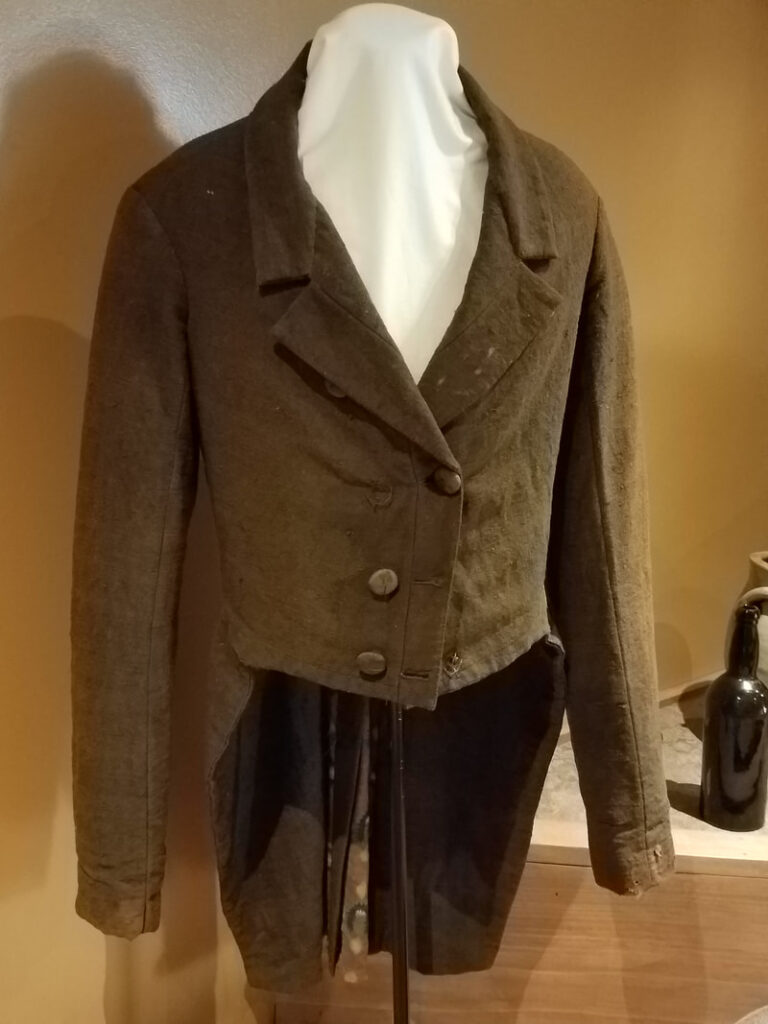
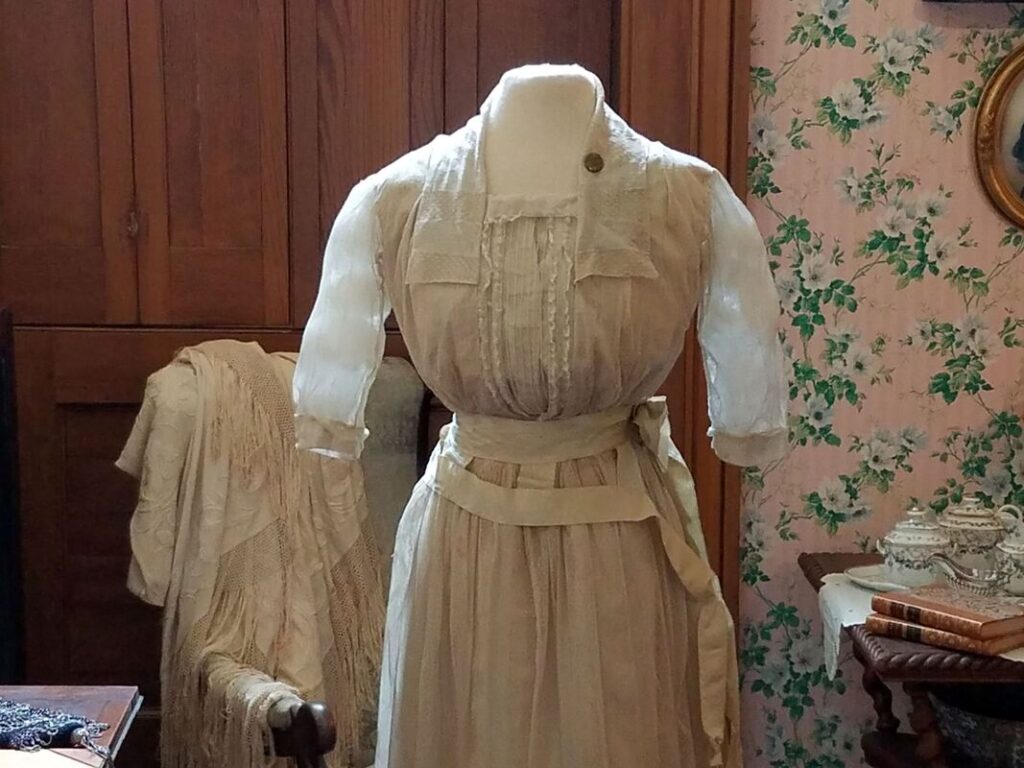
A Close-Up Look at an Original Victorian Gown
One of the best ways to learn about historical dress is to study surviving garments whenever we have the opportunity. Fashion plates show us the fashionable silhouette, and period sewing manuals tell us how clothing was constructed, but an original garment lets us see details that can be difficult to appreciate anywhere else.
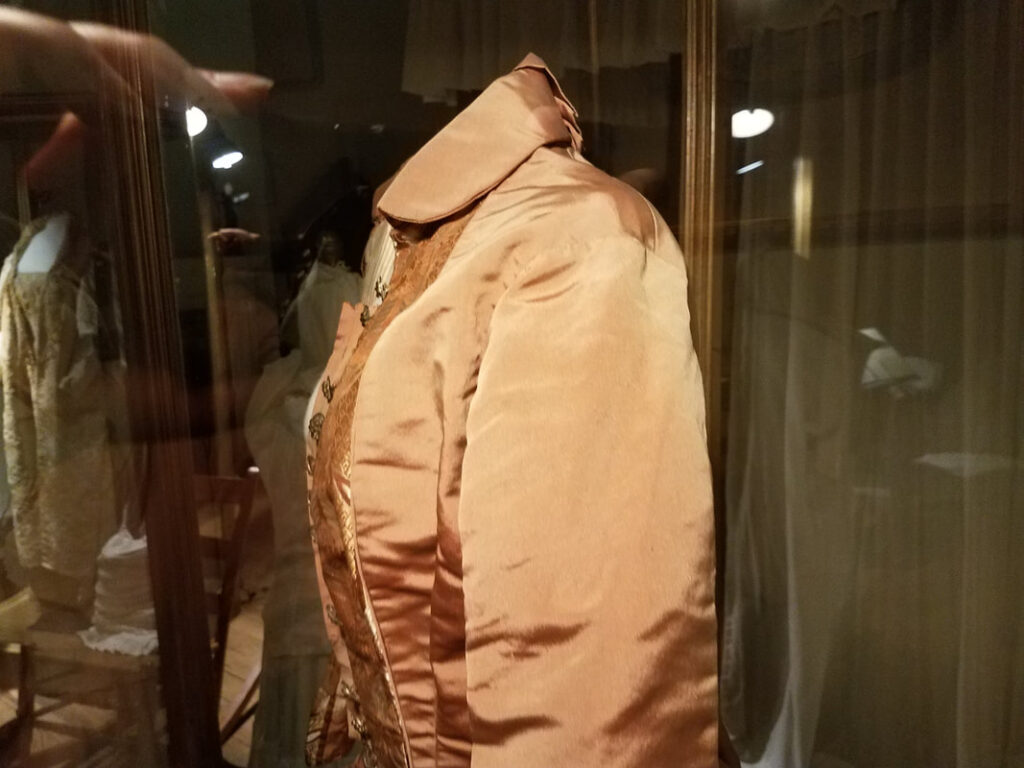
I photographed this beautiful Victorian gown while visiting White Hall State Historic Site in Richmond, Kentucky.
And I have to admit—I was so busy concentrating on all the wonderful little details that I completely forgot to take a full-length photograph! Sometimes the historical sewing nerd in me takes over. LOL.
Fortunately, I did take plenty of close-up photographs, and those may actually be more useful for anyone interested in Victorian dress construction, historical sewing, and reproducing 19th-century clothing.
Details to Notice on This Victorian Gown
There is so much to study on this garment.
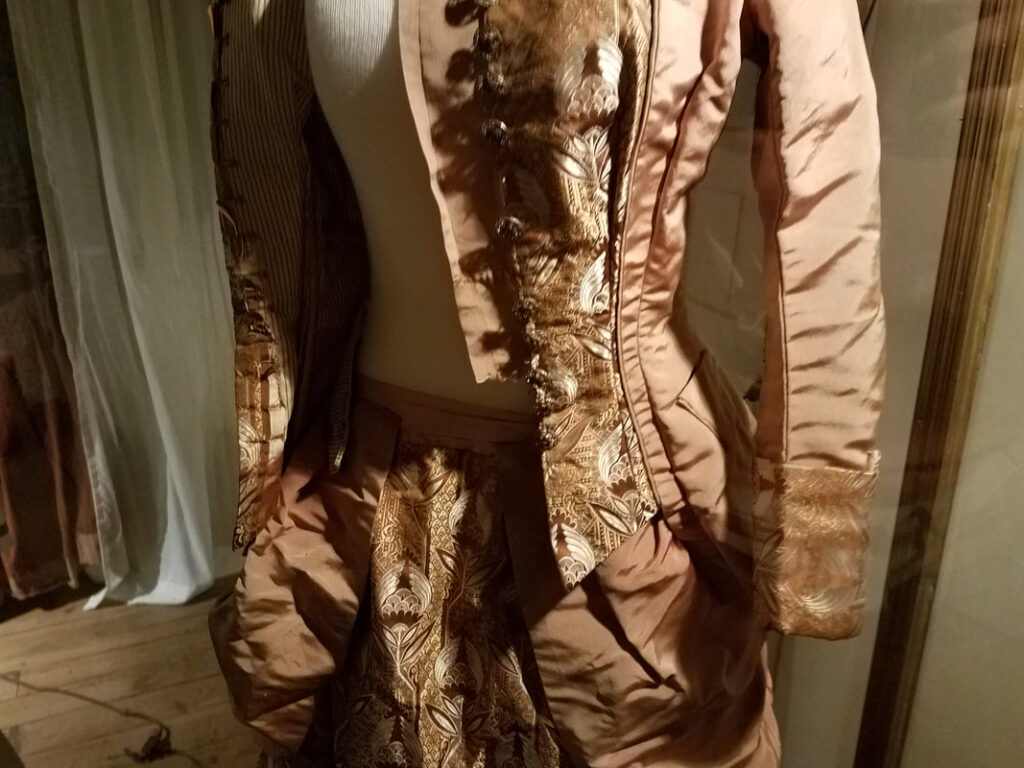
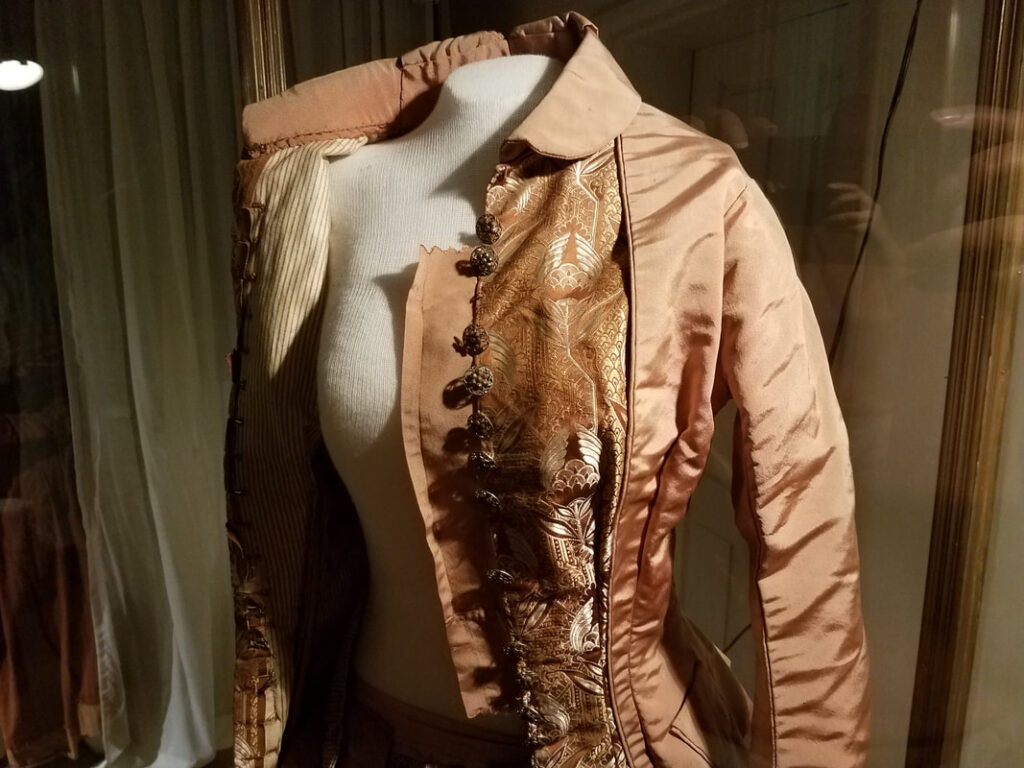
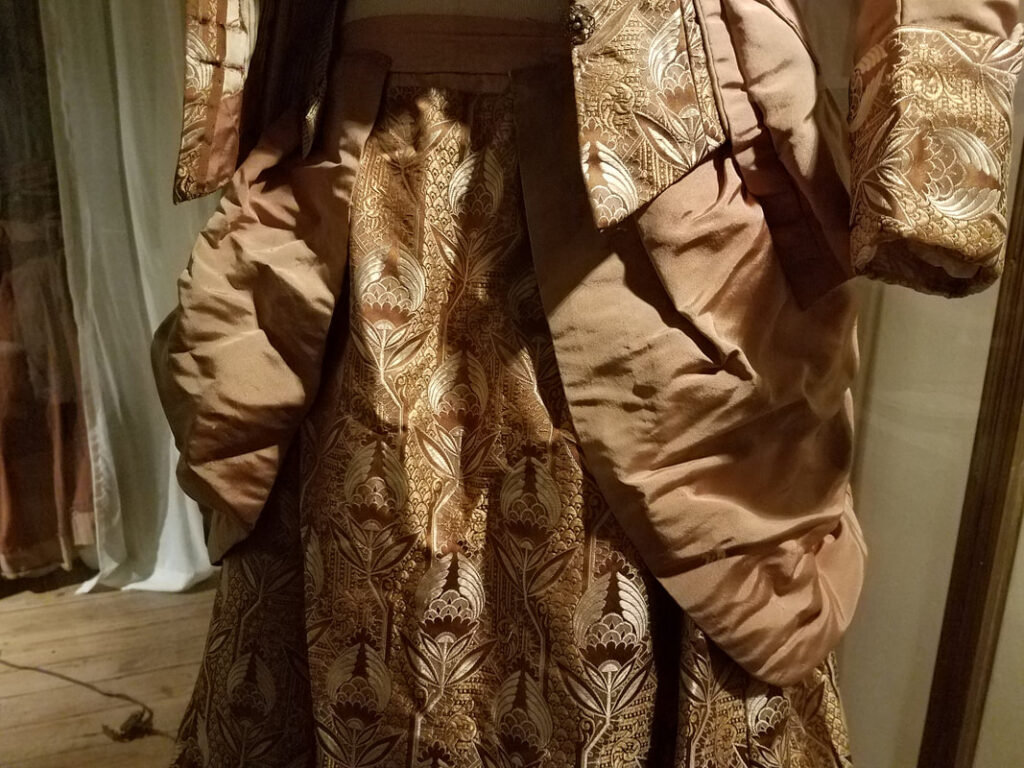
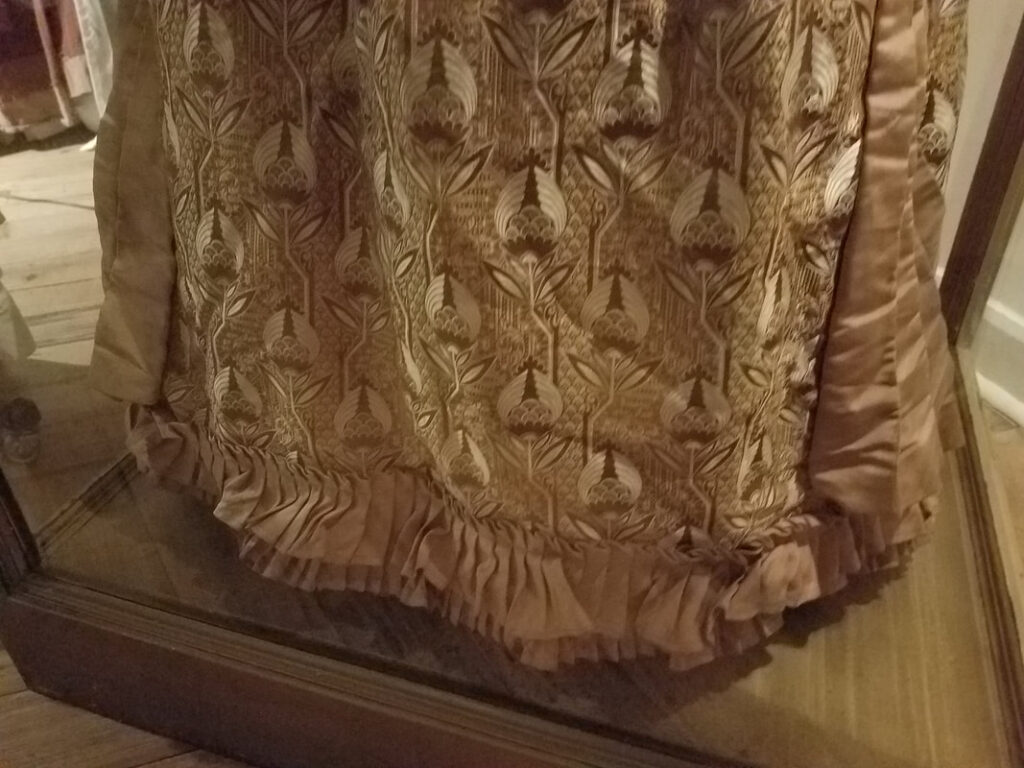
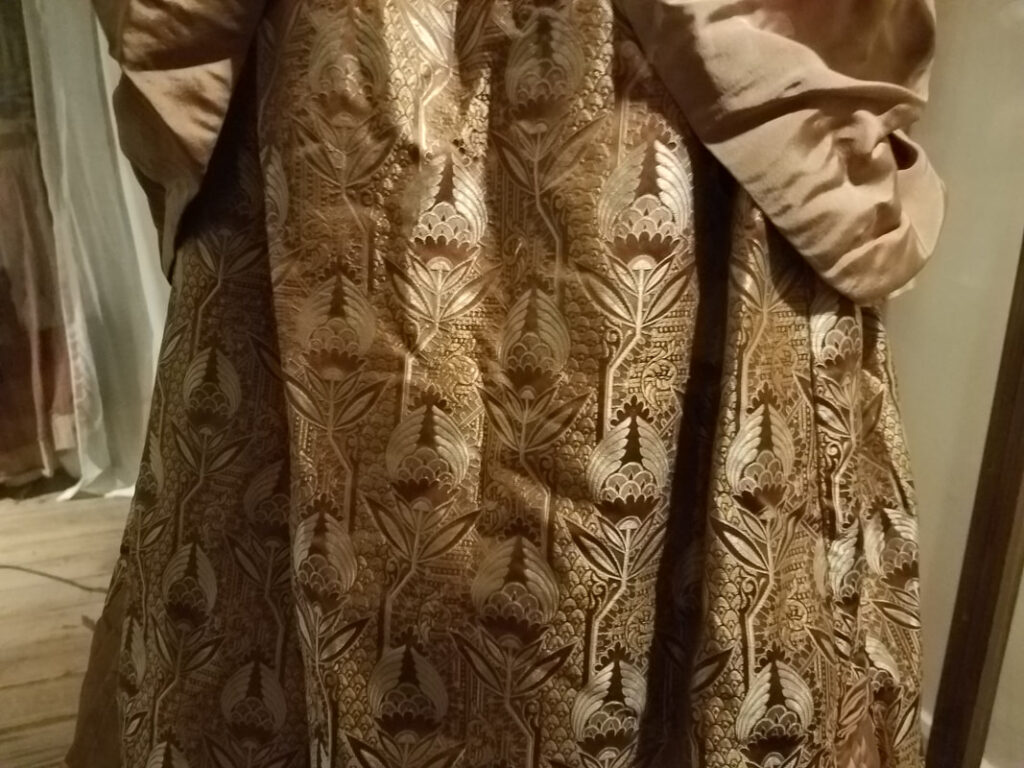
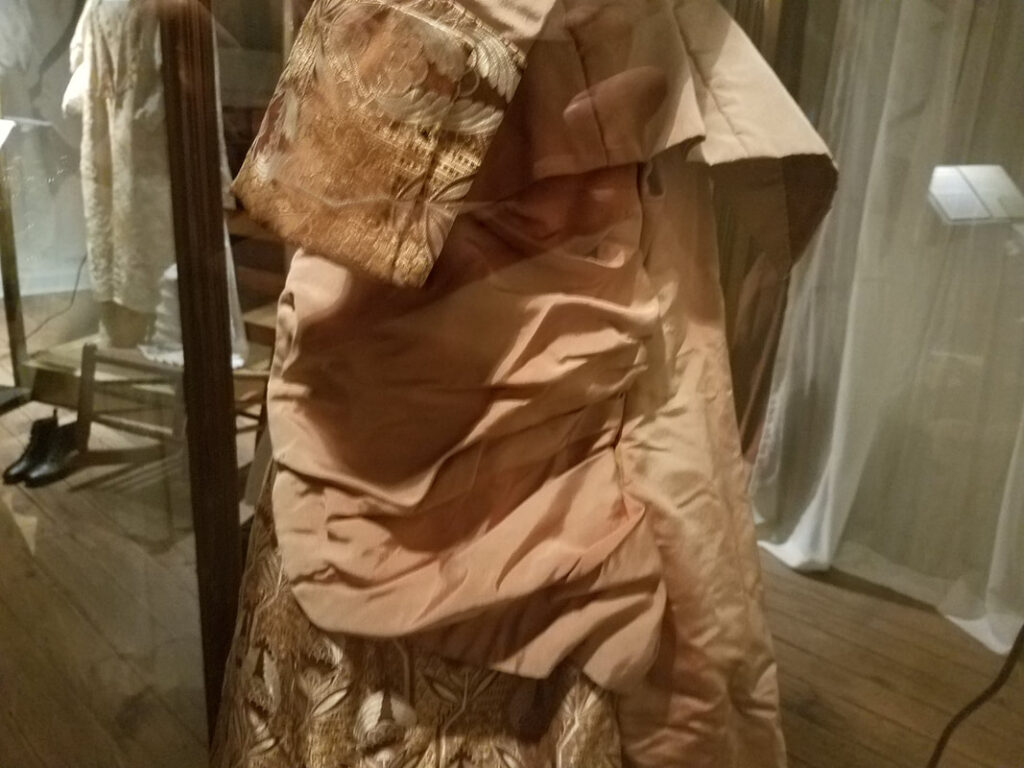
The gown combines a warm rose-brown solid fabric with a beautifully patterned contrasting fabric used extensively on the front, cuffs, and skirt. The contrast between the relatively simple main fabric and the richly patterned textile creates an incredibly elaborate effect.
As you look through the photographs below, pay particular attention to:
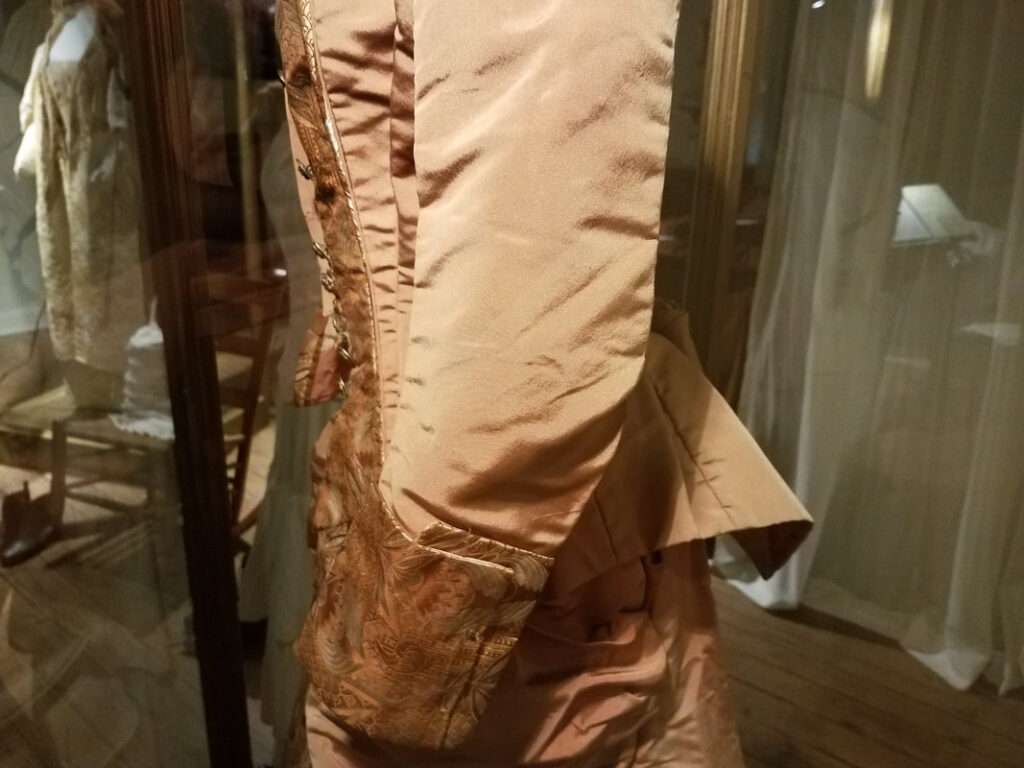
- the fitted bodice and its long, narrow shaping
- the contrasting patterned fabric running down the front
- the row of decorative metal buttons
- the small collar
- the long, fitted sleeves
- contrasting patterned cuffs
- the small angled pocket
- the striped fabric visible inside the bodice
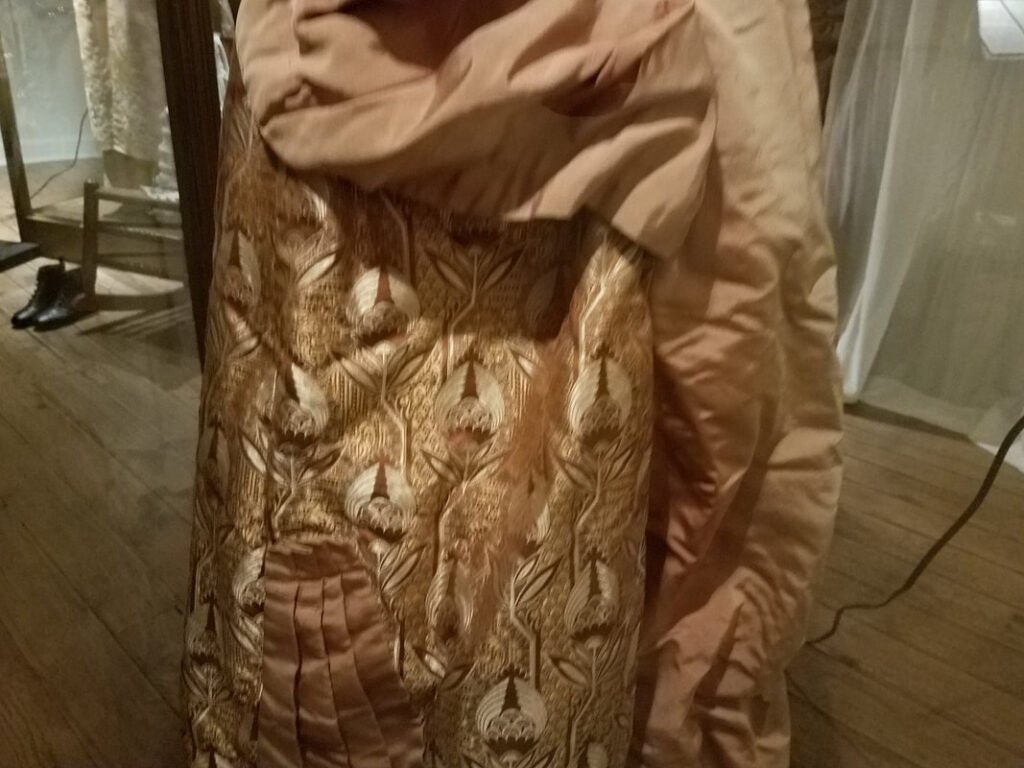
- the dramatic arrangement of the overskirt
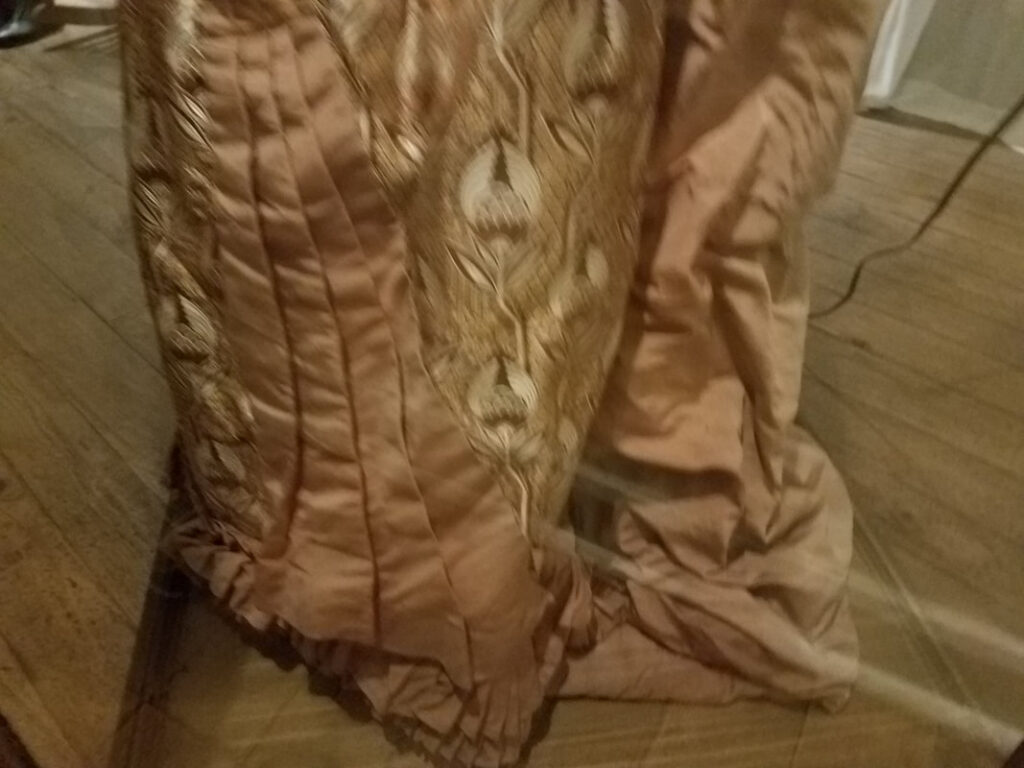
- the patterned underskirt
- the pleated trim along the hem
- the way the fabric has been pleated, draped, and controlled to create fullness toward the back
These are exactly the kinds of details that can be difficult to understand from a fashion illustration alone.
A fashion plate gives us the finished appearance. A surviving dress gives us clues about how that appearance was actually created.
Photographs of the Victorian Gown
Below are the photographs I took at White Hall. I recommend looking closely at each one rather than simply viewing the dress as a whole. The different angles reveal details of the bodice, sleeve, cuffs, skirt, trim, and draping that aren’t visible from a single photograph.
What Historical Sewers Can Learn From This Gown
One of the things I love most about studying original clothing is seeing just how much work went into creating the silhouette.
From a distance, we might simply see a beautiful Victorian dress. Up close, we begin to see the individual decisions that created it: contrasting fabrics, carefully positioned trim, fitted seams, decorative buttons, pleating, draping, cuffs, pockets, and layers of fabric arranged to produce the desired shape.
For someone interested in recreating Victorian clothing, these details are invaluable.
It is also worth studying the imperfections. Original garments have wrinkles, wear, alterations, unevenness, and evidence of their age. Historical clothing wasn’t created as a perfectly smooth costume displayed on a modern mannequin. These were real garments made from real fabric and constructed to be worn on real bodies.
Love Historical Sewing & Fashion?
Join the Old Time Patterns email list for historical sewing resources, vintage fashion research, new articles, free resources, and updates from the Old Time Patterns library.
Frequently Asked Questions About Victorian Gowns
What fabrics were used for Victorian gowns?
Victorian dresses were made from many different fabrics depending upon the period, purpose of the garment, season, and the wearer’s means. Silk, wool, cotton, linen, and combinations of fibers could all be used.
Surviving garments are especially helpful because they show how contrasting colors, textures, and patterns could be combined within a single dress.
Why did Victorian dresses use so much fabric?
The fashionable silhouette changed considerably throughout Queen Victoria’s reign, but many Victorian styles required substantial amounts of fabric to create wide skirts, trains, drapery, pleating, and other decorative effects.
The skirt of this gown is particularly interesting because the fabric isn’t simply hanging straight from the waist. It has been deliberately arranged and controlled to create its shape.
How did Victorian dresses create fullness at the back?
Depending on the particular period and style, Victorian women used various understructures and methods of skirt construction to create fashionable silhouettes.
Bustles and other supports could provide structure beneath the skirt, while pleating, gathering, draping, and carefully positioned fabric created additional volume and visual interest.
Were Victorian dresses made as one piece?
Not always. Nineteenth-century dresses could consist of separate bodices and skirts or multiple coordinated pieces, while others were constructed differently depending upon the period and type of garment.
When studying a museum garment through glass, it isn’t always possible to determine every aspect of its construction, which is why interior photographs, museum catalog records, and direct examination can be so valuable to researchers.
Why are original Victorian garments useful for historical sewing?
Surviving garments provide evidence that modern reproductions and illustrations cannot always give us.
They allow researchers and historical sewers to study seam placement, proportions, closures, trim, fabric manipulation, sleeve construction, skirt arrangement, and many other details of historical dressmaking.
Can you recreate a Victorian gown from museum photographs?
Museum photographs can be an excellent starting point, especially when they include close-up views like these. However, photographs cannot reveal every detail.
An accurate reproduction may also require measurements, views of the back and interior, information about the original textiles, and comparison with surviving patterns, period dressmaking manuals, fashion plates, and other garments from the same period.
Visit White Hall in Richmond, Kentucky
White Hall was the home of Kentucky politician and emancipationist Cassius Marcellus Clay and is now preserved as a Kentucky historic site.
For anyone interested in 19th-century history, historic houses, material culture, or period clothing, sites like White Hall can offer something that books and online collections can’t quite reproduce: the opportunity to stand only a few feet away from objects that actually survived the period.
And if you’re anything like me, you may become so fascinated by the sewing details that you forget to photograph the whole dress. LOL.
More Historical Clothing Research
If you enjoyed studying this original Victorian gown, explore more of the historical garments, fashion magazines, sewing techniques, and period pattern resources here at Old Time Patterns.
I continue to add and update resources for historical sewers, costumers, reenactors, and anyone who simply loves studying clothing from the past.
Happy sewing—and happy researching!