Beautiful Edwardian Day Dress at Ashland, the Henry Clay Estate
While visiting Ashland, the Henry Clay Estate in Lexington, Kentucky, I came across this beautiful Edwardian-era day dress on display.
One of my favorite things about visiting historic homes and museums is discovering surviving garments like this one. Photographs and fashion illustrations are wonderful resources, but there is something very different about seeing an actual historic garment and being able to study its proportions, construction, and details.
A Lovely Example of Edwardian Daywear
The dress is made in a light-colored fabric and has the graceful, feminine appearance we associate with women’s fashions of the Edwardian period.
The bodice immediately caught my attention. It has a high neckline and a full front gathered into the waist, creating the softly bloused effect that was so popular during the era.
The front is decorated with vertical bands of delicate tucks and lace or openwork trim. These small details add interest to an otherwise understated garment and are wonderful features to study if you’re interested in recreating Edwardian clothing.
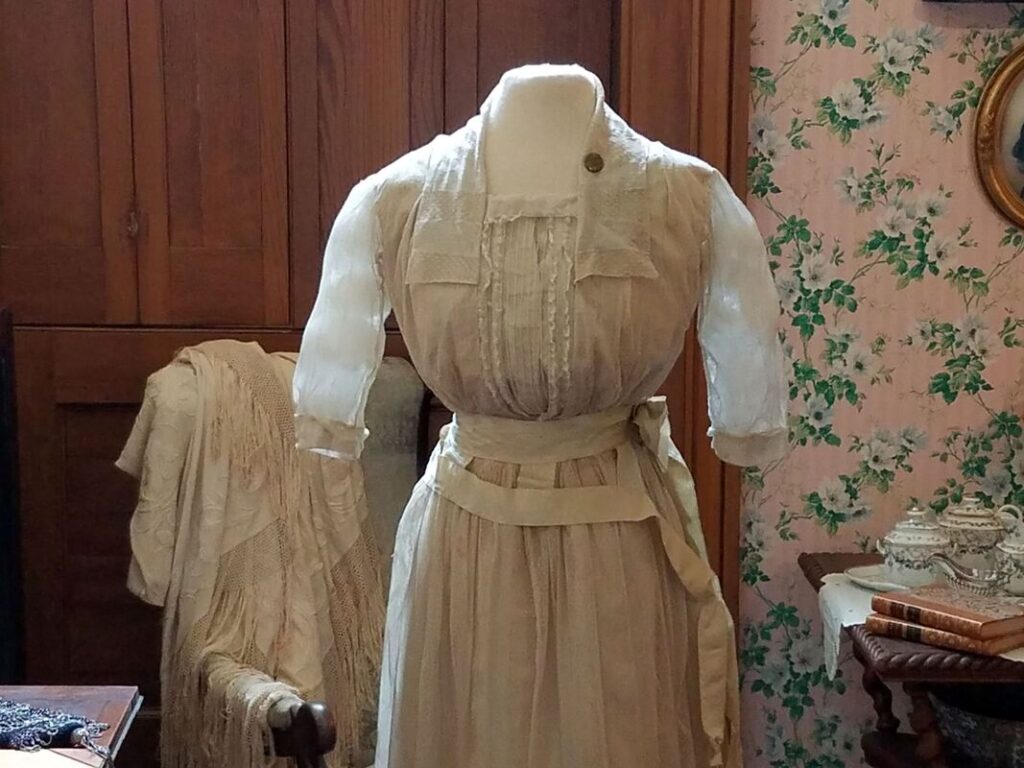
The sleeves are approximately elbow length, with a relatively simple shape compared with some of the more elaborate sleeves seen in earlier fashions.
The Waist and Skirt
Another detail worth studying is the waist treatment.
The bodice is drawn into a wide waistband, while a second decorative band sits slightly lower around the upper portion of the skirt. Small sections of gathered or pleated fabric appear between the two bands.
A long sash or tie can also be seen hanging at the side.
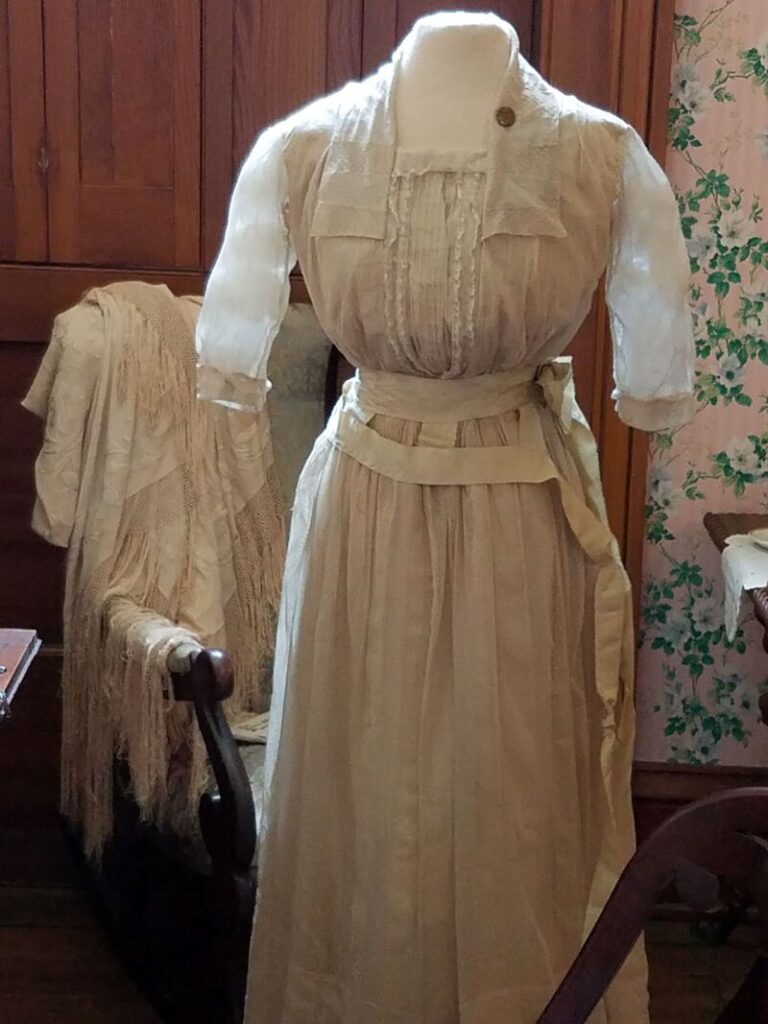
The skirt itself falls in long, relatively simple folds. Rather than relying on elaborate decoration throughout the entire dress, much of the visual interest is concentrated around the bodice and waist.
It’s a wonderful example of how details such as tucks, gathers, lace, proportion, and fabric placement can transform what initially appears to be a fairly simple dress.
Studying Original Edwardian Garments
For historical costumers and anyone interested in antique sewing patterns, surviving garments can be invaluable.
When studying an original dress, I like to look closely at things such as:
- the placement and direction of gathers and pleats
- the relationship between the bodice and natural waist
- sleeve shape and length
- the width and placement of waistbands
- decorative tucks and trims
- skirt fullness and how that fullness is distributed
- the overall proportions of the garment
Even when we can’t examine the inside of a museum garment, photographs like these can provide useful clues about how the original dress was designed and assembled.
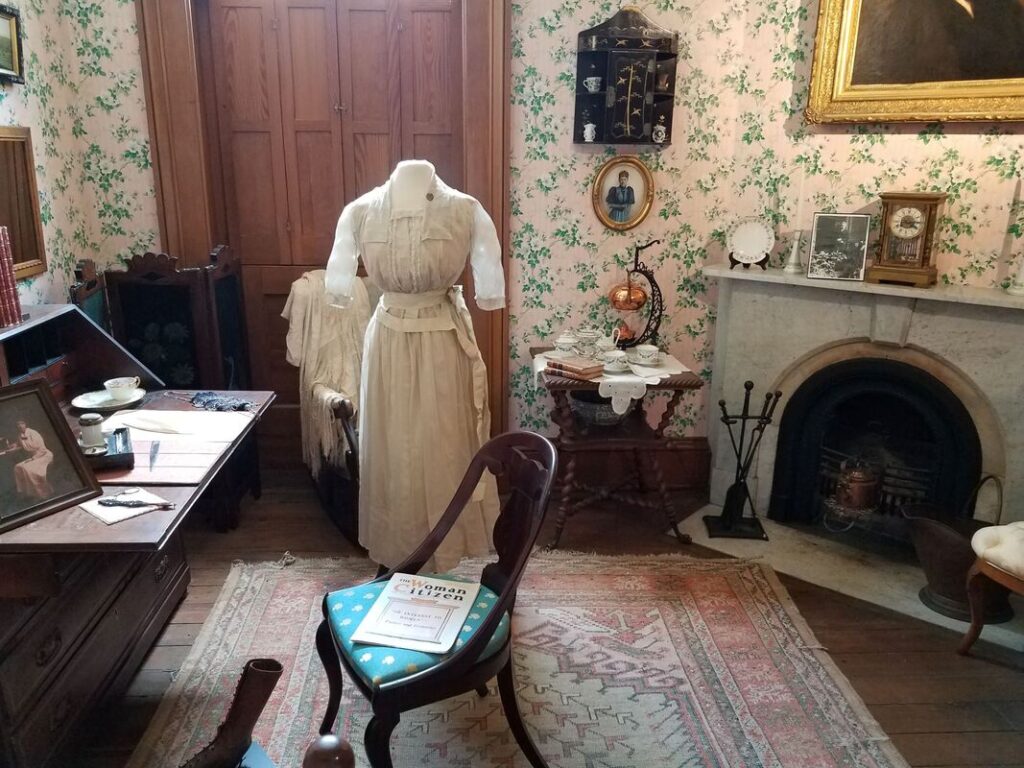
And sometimes the setting makes the experience even better. Seeing this pale Edwardian dress displayed inside the historic house, surrounded by period furnishings, certainly made it memorable.
Visiting Ashland in Lexington, Kentucky
I photographed this dress during our visit to Ashland, the Henry Clay Estate, in Lexington, Kentucky.
For anyone interested in historic homes, nineteenth- and early-twentieth-century material culture, or historical clothing, museum collections can contain some wonderful surprises. I certainly wasn’t expecting to find this lovely dress when we visited!
If you’re researching Edwardian clothing for sewing, costuming, reenacting, or simply because you love historic fashion, I hope these photographs give you a few details to study.
Thanks so much for joining me! If you notice an interesting construction or design detail in the photographs that I missed, I’d love to hear about it in the comments.
Love Historical Sewing & Fashion?
Join the Old Time Patterns email list for historical sewing resources, vintage fashion research, new articles, free resources, and updates from the Old Time Patterns library.
Frequently Asked Questions About Edwardian Dresses
What did women’s dresses look like during the Edwardian era?
Edwardian women’s fashions generally emphasized a defined waist and a long, graceful silhouette. Styles changed considerably throughout the period, however, so surviving garments like this dress are especially useful for seeing how fashionable shapes, fabrics, trims, and construction were actually interpreted.
What fabrics were used for Edwardian dresses?
Edwardian dresses could be made from many different materials depending on the occasion, season, and wealth of the wearer. Silk, wool, cotton, linen, lace, and lightweight sheer fabrics all appeared in period clothing. Examining an original garment also reveals how different fabrics and trims were combined within a single dress.
How were Edwardian dresses constructed?
Edwardian garments were often much more complex than they appear from the outside. Bodices and skirts could incorporate linings, fitted seams, pleating, gathering, decorative panels, fastenings, and elaborate trim. Surviving dresses provide valuable clues for historical sewists because details that are difficult to understand from fashion illustrations can sometimes be seen directly in the garment.
Did Edwardian women wear corsets under their dresses?
Yes. Corsets remained a standard part of fashionable women’s dress during the Edwardian period. Their shape changed over time, and the foundation garments worn underneath helped create the fashionable silhouette of the outer dress.
Why are photographs of original Edwardian garments useful for historical sewing?
Original garments show details that fashion plates and modern reproductions often cannot: seam placement, proportions, fabric behavior, closures, trim application, gathering, pleating, and signs of alteration or wear. Close-up photographs can therefore be particularly valuable references for costumers and historical dress researchers.
Where is this Edwardian dress displayed?
The dress photographed for this article was displayed at the Henry Clay estate in Lexington, Kentucky.